If you’ve seen TMP in a text message and wondered what it means you’re not alone. In most texting conversations TMP usually stands for Text My Phone or can sometimes refer to Temporary depending on the context.
People often spot this abbreviation on TikTok Snapchat Instagram WhatsApp and regular text messages. Because internet slang changes quickly many users search for TMP to understand what someone really meant in a conversation.
The meaning can vary slightly depending on where it’s used and who is using it. That’s why understanding the context is important before replying.
TMP Meaning in Text
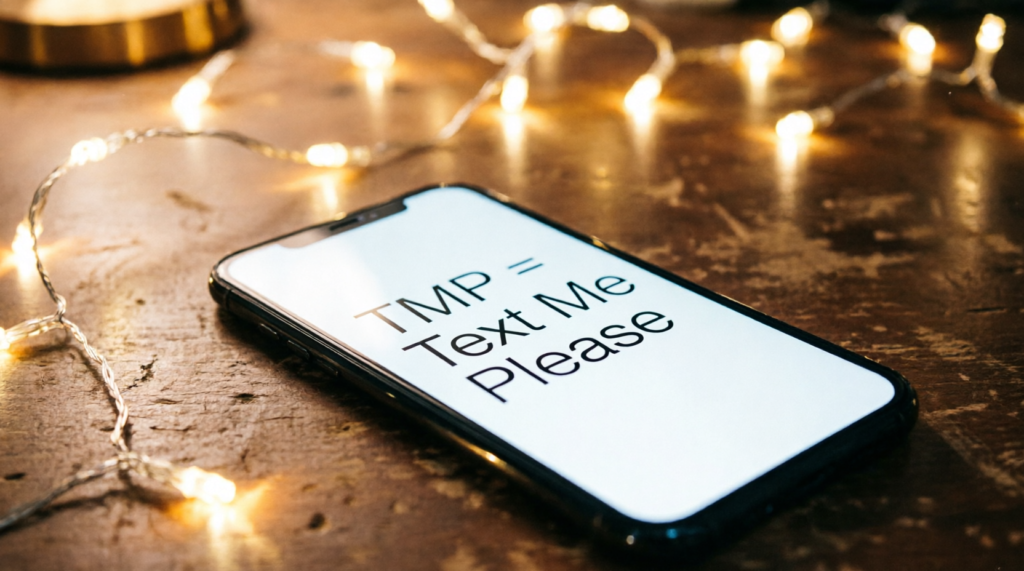
TMP is an abbreviation that can have different meanings in online communication.
The most common meanings include:
- Text My Phone
- Temporary
- Occasionally, other niche meanings depending on a specific community
In everyday texting, TMP is usually used as a shortcut to save time while typing.
For example:
“I’m busy right now, TMP later.”
In this case, the sender is asking someone to send a text message to their phone later.
When TMP means “temporary,” it often appears in discussions about situations, plans, usernames, files, or accounts that won’t be permanent.
Example:
“This is just a TMP solution until we find something better.”
TMP is considered an abbreviation rather than a traditional slang word. However, many people treat it like internet slang because it’s commonly used in casual online conversations.
Simple Definition
TMP is a short form used in texting and social media conversations. Its exact meaning depends on the context, but “Text My Phone” and “Temporary” are the most widely recognized interpretations.
What It Means in Everyday Chat
In daily conversations, TMP helps people communicate faster. Instead of typing a full phrase, they use three letters that regular internet users can quickly understand.
Where People Use TMP
TMP appears across many digital platforms.
TMP on TikTok
On TikTok, users may write TMP in comments, direct messages, or video captions.
Examples:
- “Need details? TMP.”
- “Can’t explain here, TMP later.”
TikTok users often prefer short abbreviations because comments move quickly.
TMP on Snapchat
Snapchat conversations are usually fast and informal.
Someone might send:
“TMP when you get home.”
This simply means they want a text message later.
TMP on Instagram
Instagram users may use TMP in direct messages or story replies.
Examples include:
- “TMP if you’re interested.”
- “TMP for more information.”
Because Instagram messaging is casual, abbreviations like TMP fit naturally into conversations.
TMP on WhatsApp
WhatsApp chats often contain shortcuts and abbreviations.
Users may write:
“TMP when you’re free.”
This keeps messages brief while still getting the point across.
TMP in SMS Text Messages
Traditional SMS texting is one of the oldest places where abbreviations became popular.
TMP is sometimes used to save typing time and make conversations quicker.
Real Chat Examples
Here are ten realistic examples showing how TMP might appear in conversations.
Example 1
A: Are you available tonight?
B: Busy right now.
A: Okay, TMP later.
Example 2
A: Did you get the information?
B: Not yet.
A: TMP when you receive it.
Example 3
A: I have a question.
B: I’m driving.
A: No worries, TMP when you stop.
Example 4
A: Can you explain everything?
B: It’s a lot.
A: TMP the details later.
Example 5
A: Is that your final username?
B: No, it’s TMP.
A: Got it.
Example 6
A: Are these plans permanent?
B: Nope.
A: So they’re TMP for now?
Example 7
A: Where are you?
B: At work.
A: TMP after your shift.
Example 8
A: Did you finish the project?
B: Almost.
A: TMP when it’s done.
Example 9
A: I missed your call.
B: That’s okay.
A: TMP what you needed.
Example 10
A: Is this account staying?
B: No.
A: Just TMP until launch?
How to Reply When Someone Says “TMP”
Your response depends on the situation and tone of the conversation.
Funny Replies
- “Only if my thumbs cooperate.”
- “Sure, let me charge my texting powers first.”
- “Incoming message in 3…2…1.”
Casual Replies
- “Will do.”
- “Okay, sounds good.”
- “No problem.”
Friendly Replies
- “Absolutely, I’ll text you later.”
- “Of course, talk soon.”
- “Sure thing.”
Neutral Replies
- “Understood.”
- “Okay.”
- “Noted.”
Is TMP Rude or Offensive?
No, TMP is generally not considered rude or offensive.
It is simply an abbreviation used for convenience.
Most people use it in a friendly or neutral way. The term itself does not contain insulting, inappropriate, or offensive language.
Is It Safe to Use?
Yes. TMP is usually safe to use in casual conversations, text messages, and social media chats.
Is It Appropriate at School?
In informal conversations with classmates or friends, it is usually acceptable.
For formal assignments or academic writing, it’s better to avoid abbreviations.
Is It Appropriate at Work?
For casual workplace chats, TMP may be acceptable if everyone understands it.
In professional emails and official communication, writing the full phrase is often the better choice.
Who Uses This Term?
TMP is used by a wide range of internet users.
Age Groups
Common users include:
- Teenagers
- Young adults
- College students
- Social media users
- Mobile phone users
Gen Z Usage
Gen Z frequently uses abbreviations because they communicate quickly across multiple apps.
Short forms like TMP fit naturally into modern texting habits.
Common Platforms
The abbreviation can appear on:
- TikTok
- Snapchat
- Messenger
- SMS
How Often It Appears Online
TMP is less common than abbreviations such as LOL or BRB, but it still appears regularly in texting communities and online conversations.
Origin of the Term
The exact origin of TMP is not completely clear.
Like many internet abbreviations, it likely developed because people wanted faster ways to communicate through text messages.
During the early years of mobile texting, character limits encouraged users to shorten words and phrases.
Over time, these shortcuts spread to social media platforms and messaging apps.
Internet Culture Influence
Internet culture has played a major role in the popularity of abbreviations.
As platforms became faster and more mobile-focused, short forms like TMP became useful for quick communication.
Is the Origin Certain?
Not entirely.
Because TMP can represent different phrases, there isn’t one universally accepted origin story.
Its meaning often depends on the specific online community or conversation.
Comparison Table
| Term | Meaning | Type | Usage | Popularity |
|---|---|---|---|---|
| TMP | Text My Phone / Temporary | Abbreviation | Casual texting | Medium |
| IDK | I Don’t Know | Acronym | Everyday chat | Very High |
| IDC | I Don’t Care | Acronym | Casual conversation | High |
| IMO | In My Opinion | Acronym | Opinions and discussions | High |
| BRB | Be Right Back | Acronym | Temporary absence | Very High |
Real-World Usage Example
Imagine you’re at school and your friend is rushing to class.
You ask a question about weekend plans.
Instead of stopping to explain everything, your friend replies:
“Can’t talk now. TMP later.”
A few hours later, they send you a text with all the details.
This is a simple example of how TMP can make communication faster when someone is busy.
Different Meanings of TMP Depending on Context
One reason people get confused about TMP is that it does not always mean the same thing. Unlike some abbreviations that have a single definition, TMP can have multiple interpretations depending on the conversation.
For example, one person may use TMP to mean “Text My Phone,” while another may use it to mean “Temporary.” In gaming communities, business discussions, or technical fields, TMP can even have completely different meanings.
This is why reading the surrounding messages is important. Context usually reveals the intended meaning quickly.
Why Do People Use Abbreviations Like TMP?
Modern online communication moves fast. People often want to send messages quickly without typing long sentences.
Abbreviations help save time, reduce typing effort, and keep conversations flowing naturally. This is especially useful on mobile devices where users frequently communicate while multitasking.
TMP is part of a larger trend where internet users shorten phrases into easy-to-type combinations of letters.
Signs Someone Means “Text My Phone”
Sometimes it can be difficult to determine which meaning of TMP is being used.
Here are common clues that suggest TMP means “Text My Phone”:
- The conversation involves contacting someone later.
- The sender is busy at the moment.
- The message mentions calling, messaging, or communication.
- The phrase appears as a request.
Example:
“I’m in a meeting. TMP after 5.”
In this situation, the meaning is clearly related to messaging.
Signs Someone Means “Temporary”
TMP often means “Temporary” when discussing plans, files, accounts, usernames, jobs, or situations.
Common indicators include:
- Discussions about future changes.
- References to something that won’t last.
- Mentions of updates or replacements.
- Conversations about short-term solutions.
Example:
“This profile picture is TMP until I get a better one.”
The focus here is on something that is not permanent.
Common Mistakes People Make When Interpreting TMP
Many internet abbreviations have multiple meanings, and TMP is no exception.
One common mistake is assuming every use of TMP means exactly the same thing. This can lead to confusion and misunderstandings.
Another mistake is relying solely on dictionary definitions without considering the conversation itself.
When in doubt, asking for clarification is often the easiest solution.
TMP in Group Chats
Group chats are one of the most common places where TMP appears.
In active group conversations, people often use abbreviations because many messages are being exchanged quickly.
Someone might write:
“TMP the details to everyone.”
Or:
“This group name is TMP until we choose a better one.”
The meaning becomes clear from the topic being discussed.
How TMP Fits Into Modern Internet Language
Internet language constantly evolves. New slang terms appear every year, while older abbreviations remain popular because they are simple and useful.
TMP reflects the growing preference for short, efficient communication. Users today often favor quick messages over long explanations.
This trend is especially visible among younger social media users who communicate across several apps every day.
When You Should Avoid Using TMP
Although TMP is widely understood in certain online communities, there are situations where using it may not be the best choice.
Consider avoiding TMP when:
- Writing professional emails.
- Communicating with clients.
- Submitting school assignments.
- Talking with people unfamiliar with internet abbreviations.
- Creating formal business documents.
In these situations, writing the full phrase improves clarity.
Similar Texting Abbreviations You Might See
If you’re learning internet slang, you’ll likely encounter many abbreviations similar to TMP.
Some popular examples include:
- LOL – Laughing Out Loud
- TBH – To Be Honest
- TTYL – Talk To You Later
- BTW – By The Way
- NVM – Never Mind
- SMH – Shaking My Head
- FWIW – For What It’s Worth
Learning these abbreviations can make online conversations easier to understand.
How TMP Has Changed Over Time
Texting language has evolved significantly since the early days of mobile phones.
Years ago, abbreviations were often created because text messages had strict character limits. Today, people continue using shortcuts mainly because they are convenient.
TMP remains useful because it communicates an idea quickly without requiring a full sentence.
As online communication continues to evolve, abbreviations like TMP will likely remain part of everyday digital conversations.
Should Parents Know What TMP Means?
Parents often want to understand the abbreviations their children use online.
Knowing terms like TMP can help adults follow conversations more easily and avoid misunderstandings.
Fortunately, TMP is generally harmless and does not typically carry negative, offensive, or dangerous meanings.
Most uses are related to everyday communication and casual texting.
TMP Meaning Around the World
Internet slang often spreads across countries through social media platforms.
People in the United States, United Kingdom, Canada, Australia, and many other regions may encounter TMP online.
While the exact interpretation can vary, the abbreviation is generally understood through context rather than location.
Because online communities are global terms like TMP can quickly gain recognition among users from different cultures and backgrounds.
TMP Meaning in Online Gaming
TMP occasionally appears in gaming chats, Discord servers, and multiplayer communities. However, its meaning may differ from regular texting.
Gamers often use abbreviations to communicate quickly during matches. Depending on the game or community, TMP could be used as a temporary label, a shorthand instruction, or an abbreviation with a game-specific meaning.
Because gaming communities often create their own vocabulary, it’s always a good idea to consider the conversation before assuming a meaning.
For example:
“TMP squad until the tournament starts.”
In this case, TMP could refer to a temporary team arrangement rather than a texting-related meaning.
TMP in Professional and Technical Settings
Outside social media, TMP can appear in technical, business, and workplace environments.
In technology, programming, and computer systems, TMP is often associated with the word “temporary.” Many software programs use TMP when naming temporary files or folders.
For example:
- tmp folder
- tmp file
- tmp storage
Someone working in IT may immediately think of temporary data rather than texting slang when they see TMP.
This highlights why context matters when interpreting abbreviations.
Can TMP Have Different Meanings in Different Communities?
Yes. Internet language is highly flexible.
A term that means one thing on TikTok may mean something entirely different in a gaming forum, workplace chat, or software discussion.
Online communities frequently develop their own shorthand expressions. As a result, TMP does not always have a universal definition.
When a meaning seems unclear, looking at the topic of conversation usually helps identify the correct interpretation.
Why Context Is More Important Than the Letters
Many newcomers to internet slang focus only on the abbreviation itself.
However, experienced internet users know that surrounding words often matter more than the abbreviation.
Consider these examples:
“TMP after class.”
This likely relates to texting.
Meanwhile:
“Create a TMP file first.”
This clearly refers to a temporary file.
The same three letters can communicate different ideas depending on the situation.
TMP and the Evolution of Mobile Communication
The rise of smartphones has changed how people communicate.
Modern users often send dozens or even hundreds of messages every day. To keep communication efficient, abbreviations remain popular despite improved keyboards and voice typing.
TMP represents a broader trend toward shorter digital communication styles that prioritize speed and convenience.
As messaging apps continue to evolve, abbreviations remain a natural part of online conversations.
How Search Trends Increase Interest in TMP
Every year, thousands of internet users search for unfamiliar abbreviations.
People often encounter a term in a message and immediately search for its meaning online.
This creates ongoing interest in abbreviations like TMP because:
- New users join social media daily.
- Slang spreads quickly across platforms.
- Meanings can vary by context.
- People want to avoid misunderstandings.
As long as digital communication exists, searches for texting abbreviations are likely to continue.
TMP vs Writing the Full Phrase
Some people prefer abbreviations, while others prefer complete words.
Using TMP can make messages shorter and faster to send.
Example:
“TMP later.”
Instead of:
“Please text my phone later.”
The abbreviation saves space and time.
However, full phrases are often better when communicating with people who may not understand internet shorthand.
Choosing between TMP and the full phrase depends on your audience.
How Beginners Can Learn Internet Slang Faster
Understanding abbreviations becomes easier with practice.
A few simple tips include:
- Pay attention to context.
- Look at previous messages.
- Learn common texting abbreviations.
- Ask for clarification when needed.
- Keep a list of new terms you discover.
Most internet slang follows predictable patterns, making it easier to learn over time.
TMP and Digital Communication Habits
Communication habits have shifted significantly over the last decade.
People increasingly rely on quick messages, emojis, reactions, and abbreviations instead of lengthy conversations.
TMP fits naturally into this style because it conveys information in a compact format.
The popularity of messaging apps has reinforced the use of abbreviations as part of everyday communication.
How TMP Might Be Used in the Future
Internet language constantly changes.
Some abbreviations disappear, while others remain popular for years.
TMP may continue to be used because it is short, practical, and adaptable to different situations.
Future generations of internet users may adopt new meanings or use the abbreviation in ways that do not yet exist.
This flexibility is one reason internet slang evolves so rapidly.
Benefits of Understanding Terms Like TMP
Learning common internet abbreviations offers several advantages.
You can:
- Understand online conversations more easily.
- Avoid communication mistakes.
- Participate confidently in social media discussions.
- Keep up with digital culture.
- Improve your texting knowledge.
Even simple abbreviations can make a noticeable difference in how effectively you communicate online.
TMP and Cross-Platform Communication
One interesting aspect of TMP is that it can move seamlessly between different platforms.
A user might see it:
- In a Snapchat message.
- On a TikTok comment.
- Inside a WhatsApp group.
- During a Discord conversation.
- In a traditional text message.
This ability to travel across platforms helps keep abbreviations relevant and widely recognized among internet users.
Does Everyone Understand TMP?
Not necessarily.
People who spend a lot of time online are more likely to recognize abbreviations than those who rarely use social media or texting apps.
Factors that influence understanding include:
- Age
- Internet experience
- Social media activity
- Online community involvement
- Familiarity with texting culture
Because knowledge levels vary, it is sometimes better to spell out the full phrase when clarity is important.
The Role of Abbreviations in Internet Culture
Abbreviations have become a defining feature of online communication.
They help users express ideas quickly while adapting to fast-moving digital environments.
Terms like TMP reflect how internet culture values efficiency, convenience, and speed.
Although language continues to evolve, abbreviations remain an important part of how people communicate online every day.
Frequently Asked Questions
What does TMP mean in text messages?
TMP commonly means “Text My Phone” or “Temporary,” depending on the conversation.
What does TMP mean on TikTok?
On TikTok, TMP is usually used in comments or direct messages as a quick abbreviation.
Is TMP slang?
It’s more accurately described as an abbreviation, although many people treat it like internet slang.
Is TMP rude or offensive?
No. TMP is generally neutral and not considered offensive.
How should you reply to TMP?
Simple replies such as “Okay,” “Will do,” or “Sure thing” usually work well.
Conclusion:
TMP is a texting abbreviation that most commonly means Text My Phone or Temporary. The intended meaning depends on the context of the conversation.
You’ll most often see it on TikTok Snapchat Instagram WhatsApp and regular text messages. It’s generally friendly harmless and easy to understand once you know what it stands for.
When using TMP remember that informal abbreviations work best in casual conversations. In professional or academic situations writing the full phrase is usually the safer option.
Discover more post:
| https://meanguid.com/what-does-idc-mean-in-text/ |
| https://meanguid.com/what-does-ps-mean-on-a-letter/ |
| https://meanguid.com/ikkk-meaning/ |