If you’ve seen TBC in a text message, social media post or online conversation it usually means To Be Confirmed. People use it when details are not finalized yet and will be announced later.
The abbreviation appears frequently on TikTok Snapchat Instagram WhatsApp, and regular text messages. It’s commonly used when discussing plans events schedules or information that isn’t fully decided.
Many people search for this term because it can have different meanings depending on the context. In most online conversations, however, TBC simply means that something is still pending confirmation.
Whether you’re chatting with friends planning an event or reading social media updates understanding this abbreviation can help you avoid confusion.
TBC Meaning in Text
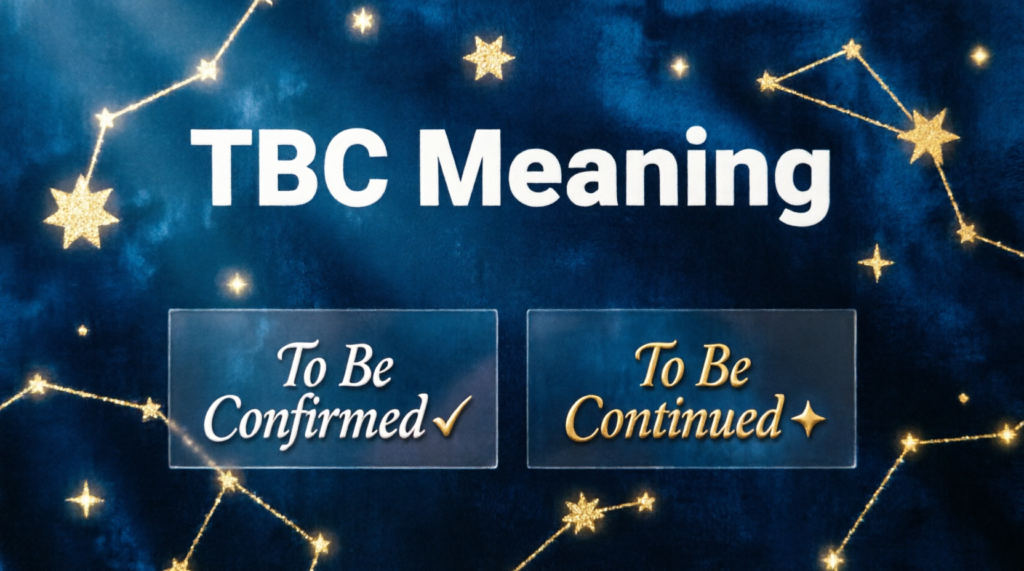
TBC stands for “To Be Confirmed.”
It is an abbreviation rather than internet slang. People use it when information is not yet finalized or when they’re waiting for confirmation before providing complete details.
In everyday conversations, TBC acts as a placeholder. It tells others that more information will be available later.
For example:
- “Meeting time is TBC.”
- “The concert venue is TBC.”
- “Our travel plans are still TBC.”
In all of these examples, the person is saying that the final details have not been confirmed yet.
What Does TBC Mean in Everyday Chat?
In casual texting, TBC is a quick way to tell someone:
- The details are not final.
- You’re still waiting for confirmation.
- An announcement will come later.
- Plans may change.
Instead of typing a full sentence, people simply write “TBC” to save time.
Where People Use TBC
TBC appears across many online platforms and messaging apps.
TBC on TikTok
TikTok creators often use TBC in captions and comments when announcing future content.
Examples:
- “Part 2 date TBC.”
- “Livestream schedule TBC.”
- “Special guest TBC.”
This creates anticipation while indicating that the final information isn’t available yet.
TBC on Snapchat
On Snapchat, users commonly use TBC when discussing plans.
Examples:
- “Movie time TBC.”
- “Weekend trip TBC.”
Friends immediately understand that the details are still being worked out.
TBC on Instagram
Instagram users include TBC in:
- Story announcements
- Event promotions
- Giveaway posts
- Collaboration updates
For example:
“Launch date: TBC.”
TBC on WhatsApp
WhatsApp groups frequently use TBC when organizing events.
Examples:
- “Dinner location TBC.”
- “Meeting room TBC.”
- “Departure time TBC.”
This helps everyone know that information will be updated later.
TBC in SMS Text Messages
Traditional texting remains one of the most common places to see TBC.
Examples:
- “The appointment date is TBC.”
- “The exact schedule is TBC.”
The abbreviation keeps messages short and clear.
Real Chat Examples
Example 1
A: Are we still going to the concert?
B: Yes, but the start time is TBC.
A: Okay, let me know when you find out.
Example 2
A: What’s the venue for the event?
B: TBC at the moment.
A: Got it.
Example 3
A: When’s the team meeting?
B: The date is TBC.
A: Thanks for the update.
Example 4
A: Are tickets available yet?
B: Not yet. Release date is TBC.
A: I’ll keep checking.
Example 5
A: What time should I arrive?
B: TBC. We’re waiting for confirmation.
A: Sounds good.
Example 6
A: Is the trip still happening?
B: Yes, but the hotel details are TBC.
A: Hopefully we know soon.
Example 7
A: When are you posting Part 2?
B: Date is TBC.
A: Can’t wait.
Example 8
A: What’s for Friday night?
B: Plans are TBC.
A: Let me know later.
Example 9
A: Have they announced the speaker?
B: Nope, speaker is still TBC.
A: Interesting.
Example 10
A: Is the schedule final?
B: Not yet, it’s TBC.
A: Thanks.
How to Reply When Someone Says “TBC”
Your response depends on the situation.
Funny Replies
- “Mystery mode activated.”
- “Keeping us in suspense, huh?”
- “I’ll mark my calendar with a question mark.”
Casual Replies
- “Okay, keep me posted.”
- “Sounds good.”
- “Let me know when it’s confirmed.”
Friendly Replies
- “No worries, update me later.”
- “Looking forward to hearing the details.”
- “Hope it gets confirmed soon.”
Neutral Replies
- “Understood.”
- “Thanks for the update.”
- “I’ll wait for confirmation.”
Is TBC Rude or Offensive?
No, TBC is not considered rude or offensive.
It is a professional and widely accepted abbreviation that simply indicates information has not yet been confirmed.
Is It Safe to Use?
Yes. TBC is safe to use in:
- Text messages
- Social media posts
- Group chats
- Professional communication
Is It Appropriate at School or Work?
Absolutely.
Unlike some internet slang terms, TBC is commonly used in workplaces, schools, universities, and official announcements.
You may even see it in business emails, meeting schedules, and event planning documents.
Who Uses This Term?
TBC is used by a wide variety of people.
Age Groups
Common users include:
- Teenagers
- College students
- Working professionals
- Event organizers
- Business teams
Gen Z Usage
Gen Z often uses TBC online when discussing:
- Content releases
- Social plans
- School activities
- Group events
Although younger users recognize the abbreviation, it is not exclusive to Gen Z.
Common Platforms
You can find TBC on:
- TikTok
- Snapchat
- Discord
- Telegram
- SMS
How Often Does It Appear Online?
TBC appears frequently because people regularly discuss future plans and pending information.
Whenever details are not finalized, this abbreviation becomes useful.
Origin of the Term
The phrase “To Be Confirmed” existed long before social media became popular.
Organizations, businesses, and event planners used it for decades when details were not finalized.
As texting and internet communication grew, users shortened the phrase to TBC for convenience.
Internet Culture Influence
Online communication encourages brevity.
Just as people use:
- IDK
- BRB
- IMO
- FYI
They also use TBC to save time while keeping messages clear.
Is the Origin Certain?
Yes.
Unlike many internet slang terms with uncertain histories, TBC has a straightforward origin. It is simply an abbreviation of the phrase “To Be Confirmed.”
Comparison Table
| Term | Meaning | Type | Usage | Popularity |
|---|---|---|---|---|
| TBC | To Be Confirmed | Abbreviation | Pending details | High |
| IDK | I Don’t Know | Acronym | Expressing uncertainty | Very High |
| IDC | I Don’t Care | Acronym | Showing indifference | Very High |
| IMO | In My Opinion | Acronym | Sharing opinions | High |
| BRB | Be Right Back | Acronym | Temporary absence | Very High |
Real-World Usage Example
Imagine your friend is organizing a birthday dinner.
The restaurant hasn’t confirmed the reservation yet, so your friend sends a message to the group chat:
“Birthday dinner this Saturday. Location TBC.”
Everyone understands that the dinner is happening, but the final venue will be announced later.
Once the restaurant confirms the booking, the organizer updates the group with the complete information.
This is one of the most common real-life situations where TBC is used.
Common Situations Where People Use TBC
TBC is most useful when someone has partial information but is still waiting for final confirmation. Instead of sharing details that may change later, they use TBC as a placeholder.
Event Planning
When organizing parties, weddings, conferences, or community gatherings, people often use TBC for dates, locations, speakers, or schedules that haven’t been finalized.
Travel Arrangements
Travelers may use TBC when flight details, hotel bookings, or departure times are still being confirmed.
School Activities
Teachers, students, and school clubs frequently use TBC when announcing events that depend on approvals or scheduling.
Business Meetings
Companies use TBC when meeting times, project deadlines, or venue information are still pending.
Why Do People Use TBC Instead of Writing the Full Phrase?
The internet encourages fast communication. Short abbreviations help people save time while keeping messages easy to understand.
Saves Typing Time
Writing takes only three letters compared to typing “To Be Confirmed” every time.
Keeps Messages Short
In group chats and social media posts, shorter messages are often easier to read.
Widely Understood
Because has been used for many years, many people instantly recognize its meaning.
Different Meanings of TBC in Other Contexts
Although “To Be Confirmed” is the most common meaning, can occasionally stand for different things depending on the situation.
In Television
Some broadcasters use when a program schedule has not been finalized.
In Sports
Sports organizations may list match times, venues, or participants as until official confirmation arrives.
In Professional Documents
Reports and business presentations sometimes use to indicate information that will be added later.
Signs That TBC Means “To Be Confirmed”
Sometimes abbreviations can be confusing. Looking at the surrounding text usually reveals the meaning.
References to Dates
If appears next to a date, it likely means the date is not finalized.
References to Locations
A venue or address followed by typically means the location is still being determined.
References to People
If a guest speaker, performer, or participant is marked as , the organizer is waiting for confirmation.
When You Should Avoid Using TBC
Although the abbreviation is helpful, there are situations where spelling out the full phrase may be better.
Communicating With Older Audiences
Not everyone is familiar with internet abbreviations. Writing the full phrase can prevent misunderstandings.
Important Professional Documents
Formal reports, contracts, and official notices often benefit from clearer wording.
Customer-Facing Communications
Businesses may choose to write “To Be Confirmed” to ensure all customers understand the message.
TBC vs TBD: What’s the Difference?
Many people confuse and TBD because both relate to incomplete information.
| Term | Full Form | Meaning |
|---|---|---|
| TBC | To Be Confirmed | Information exists but is awaiting confirmation |
| TBD | To Be Determined | The information has not yet been decided |
Example of TBC
“The meeting is at 3 PM, but the room is .”
The room is likely known but still awaiting confirmation.
Example of TBD
“The meeting date is TBD.”
The date has not been chosen yet.
How TBC Helps Prevent Misinformation
Sharing unconfirmed details can create confusion. acts as a warning that information may change.
Sets Expectations
People know not to treat the information as final.
Reduces Confusion
It prevents others from making plans based on details that could change later.
Encourages Updates
When users see , they understand that future announcements are expected.
TBC in Online Communities and Forums
Discussion boards, gaming communities, and fan groups frequently use .
Gaming Events
Tournament schedules and release announcements often contain details.
Fan Communities
Fans discussing upcoming movies, music releases, or creator events may use while waiting for official news.
Online Groups
Volunteer organizations and hobby communities often rely on when planning activities.
Similar Abbreviations to TBC
Learning related abbreviations can make online communication easier.
ETA
Estimated Time of Arrival.
FYI
For Your Information.
TBD
To Be Determined.
TBA
To Be Announced.
ASAP
As Soon As Possible.
These abbreviations often appear in the same types of conversations as .
How TBC Has Changed With Social Media
Before social media, mainly appeared in newspapers, event schedules, and business documents.
Today, it is used by millions of people in:
- TikTok captions
- Instagram posts
- Snapchat stories
- WhatsApp groups
- Discord servers
- Online event pages
Its meaning has remained largely unchanged, but its visibility has grown significantly due to digital communication.
Fun Facts About TBC
It’s Older Than Most Internet Slang
Unlike newer abbreviations, existed long before social media platforms were created.
It Appears in Formal Settings
Many internet abbreviations are casual, but is commonly accepted in professional communication.
It Works Across Different Countries
English-speaking users around the world recognize and use in a similar way.
It Rarely Causes Controversy
Because it has a clear and neutral meaning, is one of the least controversial abbreviations used online.
Psychological Reason People Prefer Using TBC in Conversations
TBC is not just about saving time—it also reduces pressure in communication. People use it when they don’t want to give incorrect or unfinished information.
Avoids Giving Wrong Details
Instead of guessing, users write so they don’t accidentally share false information.
Reduces Commitment Pressure
It allows someone to stay flexible without locking into a final answer too early.
Keeps Conversations Open-Ended
signals that discussion is still ongoing, not finished.
How TBC Is Used in Professional Workflows
In offices and structured environments, is often part of planning systems.
Project Management Updates
Teams use for deadlines, assigned tasks, or resource availability when decisions are still pending.
Internal Reports
Managers may mark sections as when data or approvals are not yet ready.
Client Communication
Businesses use it carefully when sharing early-stage plans with customers.
TBC in Digital Scheduling Systems
Many apps and tools display automatically when information is missing.
Calendar Apps
Events may show when time or location is not finalized.
Booking Platforms
Hotels, flights, or reservations may show during confirmation processing.
Event Management Tools
Organizers often leave fields as until final approval is completed.
How TBC Affects Communication Clarity
Even though it is short, plays an important role in preventing misunderstandings.
Prevents Overpromising
It stops people from assuming something is final when it is not.
Signals Temporary Information
Readers understand that updates will come later.
Improves Group Coordination
Everyone knows decisions are still in progress.
Cultural Differences in Understanding TBC
is widely used in English-speaking digital spaces, but understanding may vary.
Native English Users
Usually understand it instantly as “To Be Confirmed.”
Non-Native Speakers
Some may confuse it with similar abbreviations like TBD or TBA.
Regional Usage Differences
In some regions, full phrases are preferred over abbreviations for clarity.
TBC in Media and Entertainment Industry
The entertainment world uses very frequently.
Movie Releases
Release dates are often marked when production schedules change.
Music Launches
Artists may announce albums with TBC release timing.
TV Programming
Channels use when show timings are not finalized.
Misinterpretations of TBC
Sometimes people misunderstand TBC due to lack of context.
Thinking It Means Something Final
Some users wrongly assume is a confirmed decision instead of pending.
Confusion With Similar Acronyms
People may mix it up with TBD or TBA.
Misreading in Fast Chats
In quick conversations, meaning can be overlooked if context is missing.
How Businesses Use TBC Strategically
Companies sometimes use not just for uncertainty, but also for marketing.
Building Curiosity
Leaving dates as can increase anticipation for product launches.
Flexibility in Planning
It allows companies to adjust schedules without public confusion.
Managing Public Expectations
It helps avoid backlash from delays or changes.
Role of TBC in Online Group Chats
Group chats are one of the most active places where appears.
Coordinating Plans
Friends use it when not everyone has confirmed availability.
Voting or Decision Delay
Groups may mark outcomes as until majority agrees.
Event Coordination
Details like food, timing, or place often remain until finalized.
Evolution of TBC in Internet Communication
has evolved from formal usage to everyday texting language.
From Formal Documents
Originally used in official schedules and reports.
To Casual Messaging
Now common in chats, memes, and social media captions.
Digital Shortening Trend
Part of the broader shift toward abbreviations like LOL, BRB, and IDK.
When TBC Becomes Confusing in Conversations
Even though useful, can sometimes create uncertainty.
Lack of Follow-Up Updates
If not updated later, people may remain confused.
Overuse in Messages
Too much use can make planning unclear.
Missing Context
Without explanation, some users may misinterpret its meaning.
SEO Intent Behind People Searching “What is TBC”
Understanding search behavior helps explain why this keyword is popular.
Curiosity From Social Media
Users see on TikTok or Instagram and search meaning.
Text Message Confusion
People receive messages and want quick clarification.
Academic or Professional Use
Students or workers encounter it in schedules or documents.
Summary Insight About TBC Usage
TBC is not just a simple abbreviation—it reflects how modern communication handles uncertainty. It helps people stay flexible, avoid mistakes, and keep conversations open until final details are ready.
Frequently Asked Questions
What does TBC mean in text messages?
TBC usually means “To Be Confirmed.” It indicates that information has not been finalized yet.
What does TBC mean on TikTok?
On TikTok, TBC often means details such as dates, schedules, guests, or future content have not been confirmed.
Is TBC slang?
No. TBC is an abbreviation rather than slang.
Is TBC rude or offensive?
No. It is neutral, professional, and safe to use.
How should you reply to TBC?
You can reply with phrases such as “Okay, keep me posted,” “Thanks for the update,” or “Let me know when it’s confirmed.”
Conclusion
TBC stands for To Be Confirmed. People use it when information plans dates times or details are not finalized yet.
You’ll commonly see it on TikTo Snapchat Instagram WhatsApp, and in regular text messages. It is a simple abbreviation that helps people communicate that confirmation is still pending.
Because is neutral and professional it is generally safe to use in both casual and formal situations. However if you’re communicating with someone unfamiliar with abbreviations writing out To Be Confirmed may be clearer.
Discover more post:
| https://meanguid.com/wywh-meaning/ |
| https://meanguid.com/oof-meaning-in-text/ |
| https://meanguid.com/what-do-lms-mean-in-text/ |