PS in a letter means postscript a short message added after the main body of writing. In texting and social media, people still use PS to add extra thoughts jokes or final comments after they’ve already finished their message.
You’ll often see it in emails, WhatsApp messages Instagram captions and even TikTok comments where someone wants to add one last thing.
People search for it because it looks familiar but confusing especially if they’ve only seen it in formal letters or school writing.
Let’s break it down in a simple clear way so you’ll never feel confused again.
what does ps mean on a letter Meaning in Text
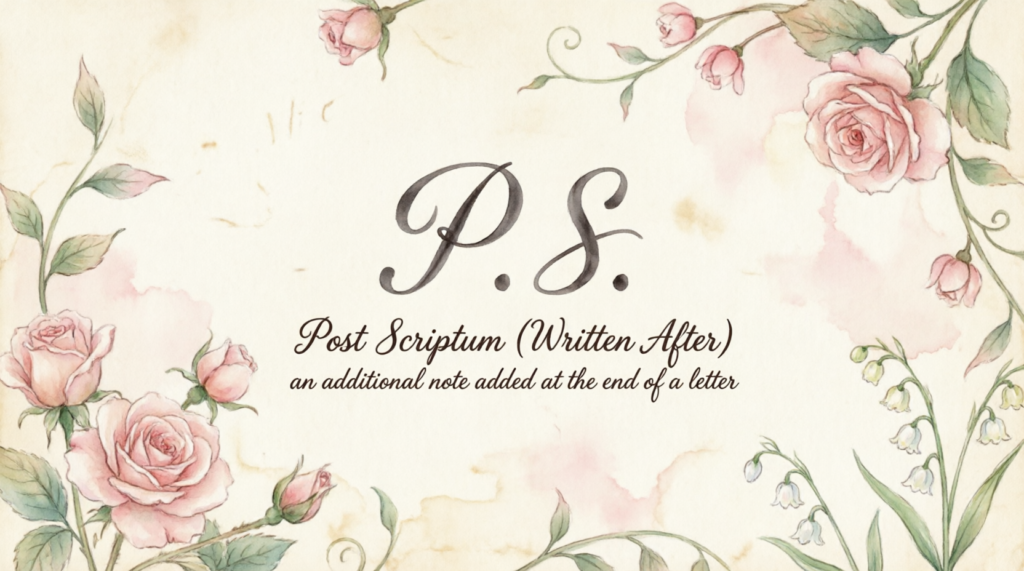
“PS” stands for Post Script, a Latin term meaning “written after.” It is an abbreviation, not slang, although people now use it casually online.
In everyday chat, it means:
- “Oh, I forgot to mention one more thing”
- “Here’s an extra note”
- “One last thought before I go”
Originally, PS was used in formal letters when people wrote by hand or typed documents and couldn’t easily insert extra lines. Instead of rewriting everything, they just added a small note at the end.
Today, it’s much more casual and flexible.
Example in modern texting:
- “PS: Don’t forget to bring snacks 😄”
So even though it comes from old-school writing, it’s still alive in modern digital communication.
Where People Use what does ps mean on a letter
People use “PS” across almost every messaging platform, but the tone changes depending on where it appears.
TikTok
On TikTok, PS often appears in captions or comments to add humor or an extra punchline.
Example:
“Had the worst day ever… PS: I still didn’t do my homework 😂”
Snapchat
On Snapchat, it’s used in chats or snaps when someone remembers something after sending a message.
Example:
“PS: Send me that pic again”
On Instagram captions, PS is used for extra thoughts or behind-the-scenes notes.
Example:
“Great trip today! PS: I almost lost my phone in the ocean 🌊”
Very common on WhatsApp. People use it to add reminders or small updates after sending a message.
Example:
“See you at 7. PS: don’t be late”
SMS
In traditional texting, PS is used just like in old letters—short, simple, and direct.
Example:
“Good night! PS: I’ll call you tomorrow”
Real Chat Examples
Here are 10 realistic conversations showing how people actually use “PS”:
Example 1
A: Are you coming to school tomorrow?
B: Yes
A: Cool, PS: bring my notebook too
Example 2
A: I liked your post!
B: Thanks 😊
A: PS: your outfit was fire
Example 3
A: Did you eat?
B: Yes
A: PS: drink water too
Example 4
A: I’m going offline now
B: Okay bye
A: PS: don’t spam me 😂
Example 5
A: I finished the assignment
B: Nice!
A: PS: it was so hard
Example 6
A: Where are you?
B: On the way
A: PS: hurry up
Example 7
A: Good morning!
B: Morning
A: PS: wake up early tomorrow
8
I miss you
Aww same
A: PS: call me later
9
I bought new shoes
Show me
PS: they were expensive 😭
10
Let’s meet at 5
Okay
PS: bring cash
How to Reply When Someone Says “PS”
When someone uses “PS,” your reply depends on tone. Here are simple ways to respond:
Funny replies
- “PS: I ignored your PS 😆”
- “Bro added bonus content 😂”
Casual replies
- “Okay noted 👍”
- “Got it”
Friendly replies
- “Haha okay, I’ll remember that”
- “Sure thing!”
Neutral replies
- “Alright”
- “Understood”
The key is: PS usually isn’t serious, so your reply doesn’t need to be either.
Is “PS” Rude or Offensive?
No, PS is not rude or offensive at all.
It is completely safe to use in:
- school chats
- work emails
- casual texting
- social media posts
However, tone matters. If someone uses PS in a demanding or strict way, the message might feel a bit bossy, but the word itself is neutral.
Example:
- “PS: Do it now.” (sounds strict)
- “PS: no pressure 😊” (sounds friendly)
So it’s not the word—it’s the context.
Who Uses This Term?
“PS” is used by almost everyone, but especially:
- Gen Z and Millennials in texting and social media
- Students in school group chats
- Office workers in emails
- Content creators on Instagram and TikTok
It appears often online because it’s short, clear, and useful for adding extra thoughts without rewriting messages.
You’ll see it more in written communication than spoken language.
Origin of the Term
The term “PS” comes from Latin:
Post Scriptum → meaning “written after”
Before digital editing, people wrote letters by hand or typewriter. If they forgot something, they couldn’t easily edit the message. So they simply added “PS” at the bottom.
Over time:
- It moved from formal letters → emails → texting
- It became more casual and playful
- It is now part of internet culture
Even though technology changed communication, “PS” stayed relevant because people still forget things after sending messages.
Comparison Table
| Term | Meaning | Type | Usage | Popularity |
|---|---|---|---|---|
| PS | Postscript / extra note | Abbreviation | Adding extra thoughts | High |
| IDK | I don’t know | Slang | Uncertainty | Very High |
| IDC | I don’t care | Slang | Indifference | High |
| IMO | In my opinion | Abbreviation | Opinions | High |
| BRB | Be right back | Acronym | Temporary leave | Medium |
Real-World Usage Example
Imagine you’re texting your friend about meeting plans.
You say:
“Let’s meet at the mall at 6.”
Then you suddenly remember something important:
“PS: bring your charger, my phone is dying too.”
This shows how PS helps you quickly add information without sending a whole new message.
It makes communication faster and more natural.
PS in Letters: Historical Background
The use of PS goes back hundreds of years to when letters were written by hand or typewriter.
Back then:
- There was no “edit” or “backspace”
- If you forgot something, you couldn’t easily fix it
- So writers added a small note at the bottom
That note became known as Post Scriptum, shortened to PS.
It was originally a practical solution, not a style choice.
Even today, the tradition continues because it is simple and effective.
Why People Still Use PS in Modern Writing
Even though we have editing tools, PS is still popular because it:
- Feels personal and natural
- Adds emphasis to important thoughts
- Helps organize extra information neatly
- Makes messages feel conversational
In emails, PS is often used to highlight something important without changing the main message.
Example use case:
A job email might include a PS to remind the reader of a portfolio link or deadline.
PS in Formal vs Informal Letters
Formal Letters
In formal writing, PS is used carefully and usually only once.
Example:
“Thank you for your consideration.
PS: I have attached my updated CV.”
Here, it adds extra professional information.
Informal Letters
In casual writing, PS can be playful or emotional.
Example:
“Miss you a lot. PS: don’t forget me 😄”
It often feels more personal and warm in this context.
Difference Between PS, PPS, and PSS
People often confuse these extensions, but they have different meanings:
- PS = first extra note after the letter ends
- PPS = post-postscript (second extra note)
- PSS = rarely used, sometimes third extra note
Example:
“PS: Call me later.
PPS: Bring my book too.”
These are mostly used in informal or creative writing.
How PS Changes Tone in Communication
PS can subtly change how a message feels:
- Makes writing feel more friendly
- Adds emphasis to a forgotten detail
- Creates a casual tone even in serious messages
For example:
- Without PS: “Send the report.” (direct)
- With PS: “Send the report. PS: thanks!” (softer tone)
It helps balance seriousness with politeness.
PS in Email Writing Today
In modern emails, PS is often used for marketing, business communication, and personal emails.
Common uses:
- Highlighting promotions
- Adding a reminder
- Including a final call-to-action
Example:
“Check out our new services.
PS: Limited-time discount ends this week.”
It draws attention because readers often notice the end of a message first.
Common Misunderstandings About PS
Many people misunderstand PS, such as thinking:
- It is outdated → (it is still widely used)
- It is slang → (it is an abbreviation, not slang)
- It must be formal → (it can be casual or formal)
The truth is, PS is flexible and works in many writing styles.
Why PS Feels Important Even in Short Messages
Even in texting culture, PS remains useful because:
- People often forget things after sending messages
- It allows quick correction or addition
- It keeps conversation flowing naturally
Instead of sending a new message, PS helps keep everything in one place.
PS in Digital Communication Culture
On social media and messaging apps, PS has evolved beyond letters.
Now it is used for:
- Humor and jokes
- Emotional add-ons
- Side comments
- Emphasis on final thoughts
It is especially common in captions where creators want to add personality.
When You Should Avoid Using PS
Even though it is useful, PS should be avoided in:
- Very formal legal documents
- Highly structured academic papers
- Technical reports requiring strict formatting
In these cases, adding a PS may look unprofessional or informal.
Summary of PS in Letters
PS is a simple writing tool that:
- Adds extra information after the main message
- Originates from traditional letter writing
- Is still widely used in modern communication
- Works in both formal and informal contexts
Clear Meaning Structure and Modern Use
“PS” on a letter means Postscript, a short message added after the main writing is finished. It is used to include extra information that the writer remembers after completing the letter or email.
In simple language, it means: “I forgot to mention something important.”
You’ll see it in letters, emails, notes, and even social media posts. It is still widely used because it’s quick, clear, and natural.
Linguistic Meaning of PS (Beyond the Acronym)
The term “PS” comes from the Latin phrase Post Scriptum.
Breaking it down:
- Post = after
- Scriptum = written
So the literal meaning is: “written after”
This explains exactly why it appears at the end of a letter—it is written after everything else is completed.
Structural Role of PS in Writing
PS is not part of the main body of a letter. Instead, it works as an add-on section.
Its role is to:
- Add missing information
- Insert a final thought
- Highlight something important
- Include a personal note
Think of it like a small appendix that appears after the closing signature.
PS Placement in a Letter Format
A traditional letter structure looks like this:
- Greeting
- Main message
- Closing line (e.g., “Yours sincerely”)
- Signature
- PS section
Example format:
“PS: Don’t forget the meeting tomorrow.”
It always comes after the signature, which is why it stands out visually.
Psychological Effect of Using PS
PS is powerful because it creates attention.
Readers often:
- Notice it immediately at the end
- Treat it as important or personal
- Remember it more than earlier lines
Writers use it intentionally to make certain details more noticeable without changing the main message.
Functional Use of PS in Communication
In real writing, PS is often used for practical purposes such as:
- Adding a reminder
- Mentioning an attachment
- Highlighting urgency
- Adding emotional closure
Example:
“PS: Please reply before Friday.”
It acts like a final checkpoint in communication.
PS in Handwritten vs Digital Letters
Handwritten Letters
- Used for corrections or forgotten thoughts
- Often more personal and emotional
- Common in older correspondence
Digital Emails
- Used for emphasis or marketing messages
- Can include links or calls-to-action
- Sometimes used for branding purposes
The meaning stays the same, but the intention changes slightly.
Cultural Evolution of PS
Over time, PS has evolved from a necessity to a stylistic choice.
Earlier:
- Used because editing was impossible
Now:
- Used for tone, personality, or emphasis
This shift shows how language adapts with technology.
Emotional Use of PS in Personal Messages
In personal writing, PS often carries emotion.
It can express:
- Affection
- Apology
- Humor
- Nostalgia
Example:
“PS: I still think about our old school days.”
It adds a human touch that feels more natural than formal writing.
PS in Business Communication Strategy
In marketing and professional emails, PS is used strategically.
Businesses use it to:
- Reinforce offers
- Highlight deadlines
- Increase engagement
- Draw attention to key actions
Example:
“PS: Offer ends tonight at midnight.”
This makes it a subtle persuasive tool in communication.
Variations of PS Usage in Writing Style
Writers sometimes adjust PS depending on tone:
- Short PS: “PS: Thanks.”
- Detailed PS: “PS: Please see attached document for full details.”
- Emotional PS: “PS: Miss you a lot.”
The flexibility is what keeps it relevant today.
Common Misconceptions About PS
Many people incorrectly believe:
- It is outdated (it is still widely used)
- It only belongs in formal letters (it works in casual writing too)
- It is slang (it is an abbreviation with historical roots)
These misunderstandings come from its old-fashioned appearance.
When PS Adds Value to Writing
PS is most effective when:
- The message is already complete
- One extra idea needs emphasis
- You want to sound natural and conversational
It should not replace important information but only support it.
Why PS Still Survives in Modern Communication
Even with editing tools and messaging apps, PS remains popular because:
- It feels human and personal
- It adds emphasis without rewriting
- It is universally understood
- It works across all writing platforms
Its simplicity keeps it alive in modern communication.
Summary of PS in Letters
PS is a postscript added after a letter is finished. It is used to include extra thoughts, reminders, or emotional notes. Although it originated in old handwritten letters, it remains widely used today in emails and digital communication.
PS as a Communication Tool (Not Just an Abbreviation)
PS is not only a word—it works as a communication technique.
Writers use it to:
- Add missing information without rewriting
- Create emphasis at the end of a message
- Add personality to formal writing
- Highlight a final important point
So instead of editing the whole letter, PS acts like a quick add-on section.
Placement Behavior of PS in Writing Structure
PS always appears in a very specific place:
- After the closing line (e.g., “Sincerely”)
- After the signature
- At the very bottom of the message
This placement is intentional because it:
- Separates it from the main content
- Makes it visually stand out
- Ensures it is read last
It is essentially the “final stop” of a letter.
PS and Reader Attention Psychology
One interesting reason PS is widely used is because of how people read messages.
Readers often:
- Focus on the beginning first
- Then scan the ending
Since PS is at the bottom, it gets:
- High visibility
- Strong recall value
- Emotional impact (if used well)
Writers sometimes use it specifically to ensure a message is not missed.
Functional Purpose in Everyday Writing
PS is used for very practical reasons in real communication:
- Adding a forgotten detail
- Giving a quick instruction
- Mentioning something optional
- Softly reinforcing a point
Example usage:
“PS: Lock the door before leaving.”
It is especially useful when the main message is already complete.
PS in Modern Email Communication
In emails, PS has evolved into a strategic tool.
Common uses include:
- Highlighting promotions or offers
- Adding contact details
- Reinforcing urgency
- Creating a friendly tone
Example:
“PS: This offer is valid until Sunday night.”
It works like a subtle reminder without interrupting the main email.
PS in Personal Writing Style
In personal letters or messages, PS often adds emotion or personality.
It can:
- Express affection
- Add humor
- Share a private thought
- Create closeness between writer and reader
Example:
“PS: I still laugh when I remember that day.”
This emotional layer is why PS still feels relevant today.
Difference Between PS and Main Message Content
PS is different from the main body of a letter in several ways:
- It is not part of the core message
- It is not required for understanding
- It is optional and supportive
- It appears after completion
Think of it like a “bonus line” added after everything is done.
PS in Formal Writing Contexts
In formal writing, PS is used carefully.
It may include:
- A polite reminder
- A secondary request
- A clarification note
Example:
“PS: Kindly confirm your attendance by Friday.”
However, overusing PS in formal writing may reduce professionalism.
Evolution of PS in Digital Culture
PS has changed meaning slightly over time:
Earlier:
- Used only in handwritten letters
Now:
- Used in emails, chats, captions, and posts
- Often used for tone or humor
- Sometimes used stylistically, not just for forgotten information
It has shifted from necessity → expression tool.
Variations and Extended Forms of PS
There are extended versions used in informal writing:
- PS = first extra note
- PPS = second extra note
- PPPS = third extra note (rare, humorous use)
Example:
“PS: Call me.
PPS: Bring snacks too.”
These are mostly used casually and not in formal writing.
Common Misinterpretations of PS
Some people misunderstand PS in different ways:
- Thinking it is slang (it is not)
- Believing it is outdated (it is still active)
- Assuming it only belongs to letters (it is used digitally too)
In reality, PS is a flexible writing tool across platforms.
Why PS Is Still Used Despite Modern Editing Tools
Even with smartphones and editing options, PS remains popular because:
- It feels natural and human
- It saves time
- It adds personality
- It highlights important details
It continues to survive because communication today values simplicity and tone.
When PS Should Be Avoided
PS is not suitable in every situation.
Avoid it in:
- Legal documents
- Technical manuals
- Strict academic writing
- Highly formal government communication
In these cases, structured formatting is preferred.
Summary of PS in Letters
PS means postscript, a short message added after a letter is completed. It is used to add extra information, reminders, or emotional notes. It started in handwritten letters but is still widely used in modern communication today.
Frequently Asked Questions
What does PS mean in text messages?
It means “postscript,” used to add extra information after a message.
What does PS mean on TikTok?
It’s used in captions or comments to add a funny or extra note.
Is PS slang?
No, it is an abbreviation from Latin, not modern slang.
Is PS rude or offensive?
No, it is completely neutral and safe to use.
How should you reply to PS?
You can reply casually like “okay,” “got it,” or with a friendly reaction depending on tone.
Conclusion:
PS simply means a short extra note added after a message. It comes from traditional letter writing but is still widely used in texting and social media today.
People use it when they forget something or want to add a final thought. It’s common harmless and easy to understand.
Just remember: use it naturally and avoid overusing it in serious or formal writing.
Discover more post:
| https://meanguid.com/whats-obo-mean/ |
| https://meanguid.com/meaning-from-a-guy/ |
| https://meanguid.com/what-does-idc-mean-in-text/ |