OOF in text usually means a reaction to something awkward painful embarrassing unfortunate or disappointing. People often use it on TikTok, Snapchat Instagram and in text messages to express sympathy surprise, or secondhand embarrassment.
If you’ve seen someone reply with oof and wondered what they meant you’re not alone. The term appears everywhere online and can have slightly different meanings depending on the conversation.
Sometimes it shows empathy when something bad happens. Other times it’s a humorous reaction to a mistake or embarrassing situation.
Understanding how people use oof can help you follow online conversations more easily and use the term naturally yourself.
OOF Meaning in Text
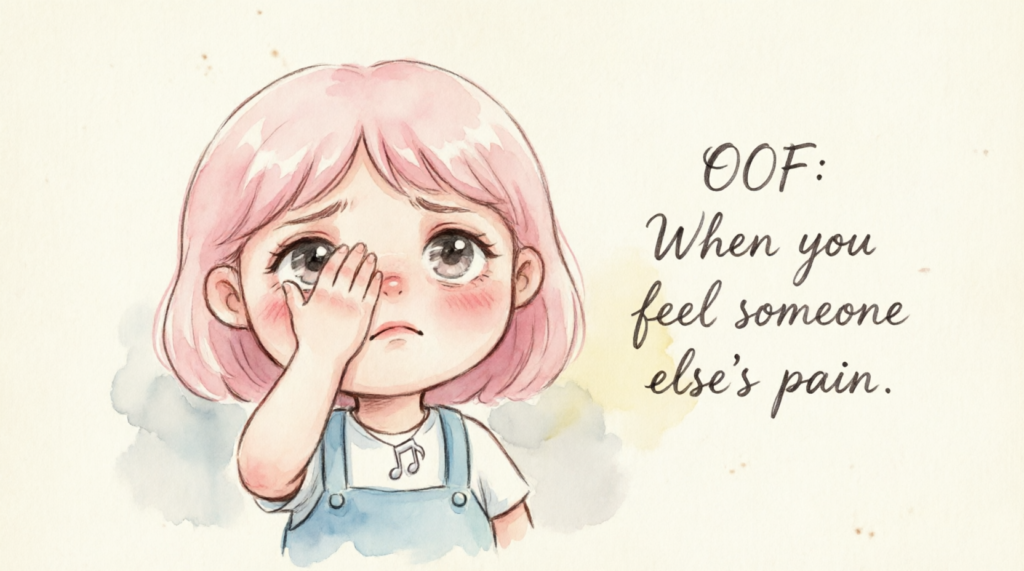
OOF is an internet slang expression used to react to something unpleasant, awkward, painful, unfortunate, or disappointing.
Unlike many online terms, OOF is not an acronym. It does not stand for separate words. Instead, it is an expression that imitates a sound people make when they experience pain, shock, or discomfort.
In everyday texting, OOF can mean:
- That sounds painful
- That’s unfortunate
- That’s embarrassing
- I feel bad for you
- Wow, that’s rough
- That’s awkward
For example:
Friend: I forgot my presentation was today.
You: Oof, that’s rough.
In this example, OOF shows sympathy while also acknowledging the unfortunate situation.
Is OOF Slang?
Yes. OOF is considered internet slang.
It became popular through online communities, gaming culture, memes, and social media platforms. Today, it’s commonly used in casual conversations between friends.
What Does OOF Mean in Everyday Chat?
In regular conversations, OOF often replaces longer reactions.
Instead of typing:
- “That sounds terrible.”
- “I’m sorry that happened.”
- “That’s embarrassing.”
Someone may simply type:
OOF
The meaning is understood through the context of the conversation.
Where People Use OOF
OOF appears on many social media platforms and messaging apps.
OOF on TikTok
On TikTok, users often comment “oof” when watching a video showing:
- An embarrassing moment
- A failed challenge
- A painful accident
- An awkward interaction
The comment acts as a quick reaction.
OOF on Snapchat
Snapchat users may send OOF after hearing bad news or seeing an unfortunate snap.
Example:
“I failed my driving test.”
Response:
“OOF. You’ll get it next time.”
OOF on Instagram
Instagram users commonly leave OOF in comments when reacting to:
- Funny fails
- Cringe moments
- Unexpected mistakes
- Awkward situations
OOF on WhatsApp
Friends often use OOF during casual chats.
Example:
“My flight got canceled.”
Response:
“OOF. That’s frustrating.”
OOF in SMS Text Messages
Traditional texting also uses OOF.
It works as a quick way to express sympathy or react to bad news without typing a long message.
Real Chat Examples
Example 1
A: I forgot my wallet at home.
B: OOF. That’s annoying.
A: I had to drive all the way back.
Example 2
A: I got a zero on the quiz.
B: OOF. What happened?
A: I missed the deadline.
Example 3
A: My phone fell into the pool.
B: OOF. Is it still working?
A: Barely.
Example 4
A: I accidentally sent the message to my boss.
B: OOF. That’s awkward.
A: Very awkward.
Example 5
A: My team lost 8-0.
B: OOF. Tough game.
A: The worst.
Example 6
A: I spilled coffee on my laptop.
B: OOF. That’s painful.
A: I’m hoping it survives.
Example 7
A: I missed the bus by ten seconds.
B: OOF. Bad timing.
A: Seriously.
Example 8
A: Everyone heard me sing accidentally.
B: OOF. Embarrassing.
A: I wanted to disappear.
Example 9
A: I forgot my anniversary.
B: OOF. Good luck.
A: I’ll need it.
Example 10
A: My internet stopped during the interview.
B: OOF. That’s rough.
A: Definitely.
How to Reply When Someone Says “OOF”
The best response depends on the conversation.
Funny Replies
- Bigger oof incoming.
- That’s an elite-level oof.
- Oof meter just exploded.
- Maximum oof achieved.
Casual Replies
- I know, right?
- Seriously.
- It was rough.
- Tell me about it.
Friendly Replies
- Thanks for understanding.
- Yeah, it wasn’t fun.
- I appreciate that.
- Hopefully things improve soon.
Neutral Replies
- That’s what happened.
- Unfortunately, yes.
- Exactly.
- Pretty much.
Is OOF Rude or Offensive?
Generally, OOF is not considered rude or offensive.
Most people use it as a harmless reaction to something unfortunate, awkward, or embarrassing.
However, tone matters.
If someone is discussing a serious issue, replying with only “OOF” may seem dismissive or insensitive.
Is It Safe to Use?
Yes. In most casual online conversations, OOF is considered safe and acceptable.
Is It Appropriate at School?
Usually yes, especially when chatting with classmates or friends.
Is It Appropriate at Work?
In informal workplace chats, it may be acceptable. However, professional emails and formal communication should use clearer and more professional language.
Who Uses This Term?
OOF is popular among internet users of different ages.
Gen Z Usage
Gen Z helped make OOF popular through:
- Gaming communities
- TikTok videos
- Meme culture
- Social media comments
Other Age Groups
Millennials and younger internet users also use OOF regularly.
Even older users may recognize the expression because of its widespread online use.
Common Platforms
The term frequently appears on:
- TikTok
- Snapchat
- Discord
- Text messages
How Often Does It Appear Online?
OOF remains a common reaction across social media because it is short, easy to type, and instantly recognizable.
Origin of the Term
The exact origin of OOF is somewhat unclear.
The expression has existed for many years as a natural sound people make when reacting to pain or impact.
Its internet popularity grew through online gaming communities and meme culture.
Many users associate OOF with gaming because sound effects resembling “oof” became widely recognized in gaming videos and memes.
Over time, the term expanded beyond gaming and became part of everyday internet language.
Today, millions of people use OOF without necessarily knowing where it originally came from.
Comparison Table
| Term | Meaning | Type | Usage | Popularity |
|---|---|---|---|---|
| OOF | Reaction to something awkward, painful, or unfortunate | Slang Expression | Casual texting and social media | Very High |
| IDK | I Don’t Know | Acronym | Answering questions | Very High |
| IDC | I Don’t Care | Acronym | Showing indifference | High |
| IMO | In My Opinion | Acronym | Sharing opinions | High |
| BRB | Be Right Back | Acronym | Temporary absence from chat | High |
Real-World Usage Example
Imagine your friend tells you they studied all week for an important exam but accidentally overslept and missed it.
You might immediately respond:
“OOF, that’s really unfortunate.”
In this situation, OOF expresses sympathy and acknowledges how disappointing the situation is without requiring a long explanation.
That’s why the term remains popular in texting and social media conversations.
What “OOF” Means in Modern Digital Conversations
In online communication, OOF is a reaction word used to show emotional response instantly.
It usually signals:
- Discomfort about someone’s situation
- Surprise at something unexpected
- Mild sympathy
- Recognition of an embarrassing moment
- Reaction to a “that went badly” situation
It is closer to a sound reaction than a written sentence.
Think of it like typing a facial expression instead of describing it.
Is OOF an Acronym or Just a Sound?
OOF is not an acronym.
It does NOT stand for words like:
- “Out Of Focus”
- “Out Of Fortune”
- “Oh Ouch Feeling”
Those are internet guesses, but not correct.
Instead, OOF is:
- An onomatopoeic expression
- Based on the sound someone makes when reacting to impact, pain, or shock
It’s similar to:
- “ugh”
- “ouch”
- “whoa”
Emotional Tone Behind OOF
OOF can carry different emotional shades depending on context:
1. Sympathy Tone
Used when someone shares bad news:
- “That’s unfortunate, I feel you.”
2. Cringe Tone
Used for awkward situations:
- “That was hard to watch.”
3. Shock Tone
Used for unexpected events:
- “That escalated quickly.”
4. Humor Tone
Used jokingly among friends:
- “That’s rough—but funny from a distance.”
Platforms Where OOF Appears Most
TikTok Comments
OOF is often used as a fast reaction under short videos.
Common scenarios:
- Fail videos
- Funny accidents
- Social cringe clips
It acts like a one-word emotional reaction.
Snapchat Chats
On Snapchat, OOF is usually sent in private conversations.
It often replaces full responses like:
- “That’s bad luck”
- “Oh no, that’s tough”
Instagram Reactions
On Instagram, people use OOF in:
- Comment sections
- Story replies
- Meme posts
It works as a quick engagement reaction.
WhatsApp Conversations
On WhatsApp, OOF is used more personally.
It often appears in:
- Friend group chats
- School discussions
- Daily updates
It keeps conversations short and expressive.
Gaming Communities
OOF became widely popular in gaming culture.
Gamers use it when:
- They lose a match
- Something goes wrong in-game
- A character fails or gets eliminated
It acts like a reaction to failure moments.
Subtle Variations of OOF in Texting
People don’t always use just “OOF”. Variations exist:
- “oof” (casual lowercase)
- “OOF!!” (strong reaction)
- “oof bro” (sympathy + friendship tone)
- “big oof” (serious mistake or failure)
- “mega oof” (extreme embarrassment or loss)
Each version changes intensity slightly.
When OOF Feels Positive vs Negative
Positive Use (Friendly Humor)
- Among close friends
- Light mistakes
- Funny failures
Example:
- “I waved back at the wrong person.”
- “OOF 😭”
Negative Use (Serious Situations)
- Bad news
- Real problems
- Emotional topics
Example:
- “I lost my job today.”
- “OOF…”
In serious cases, it should be used carefully.
Digital Culture Behind OOF
OOF reflects how internet language has changed:
- Faster communication
- Short emotional reactions
- Meme-based expressions
- Emoji-like text behavior
Instead of typing full sentences, users prefer quick emotional signals like OOF.
It represents the “fast reaction culture” of the internet.
How OOF Differs From Emojis
OOF often replaces emojis like:
- 😬 (awkward face)
- 😢 (sad face)
- 😳 (shock face)
But unlike emojis:
- It feels more “human”
- It sounds like a reaction
- It fits gaming/chat culture better
Is OOF Still Popular in 2026?
Yes, but slightly evolving.
It is still widely used in:
- Meme culture
- Gaming chats
- TikTok reactions
However, newer slang like:
- “bruh”
- “nahhh”
- “bro what”
is sometimes used alongside it.
Still, OOF remains recognizable across platforms.
Who Understands OOF Easily?
OOF is mostly used by:
- Gen Z users
- Teenagers and students
- Online gamers
- Meme culture audiences
Older users may still understand it, but don’t use it as often.
Situations Where You Should Avoid Using OOF
OOF is casual, so avoid it in:
- Job interviews or professional emails
- Serious emotional support conversations
- Formal school assignments
- Sensitive personal issues
In those cases, a proper response is better.
Simple Real-Life Meaning Breakdown
If someone says:
- “I missed my flight” → OOF = that’s bad luck
- “I failed the test” → OOF = that’s unfortunate
- “I embarrassed myself” → OOF = I feel that
It is basically a quick emotional acknowledgment word.
Deep Meaning of OOF in Digital Language
OOF is a reaction expression, not a formal word or abbreviation. It represents an emotional response to something uncomfortable, unlucky, or embarrassing.
In digital communication, it works like:
- A quick emotional sound
- A short empathy signal
- A reaction to unexpected outcomes
It is used when users want to respond instantly without explaining much.
Linguistic Type of OOF (Slang Classification)
OOF falls into these categories:
- Internet slang
- Onomatopoeic expression
- Reaction word
- Meme language term
It does NOT belong to:
- Acronyms
- Formal English vocabulary
- Technical abbreviations
It belongs purely to informal online communication.
Psychological Purpose Behind Using OOF
OOF is not just a word—it serves a communication function:
- Reduces emotional typing effort
- Shows empathy quickly
- Adds personality to text
- Keeps conversation flowing
Instead of writing long emotional sentences, users type “oof” to show understanding instantly.
Context-Based Meaning Shifts
OOF does not have a fixed meaning. It changes based on context:
1. Light Context
Used for small mistakes:
- Forgetting something
- Minor embarrassment
2. Moderate Context
Used for relatable failures:
- Losing games
- Missed opportunities
3. Strong Context
Used for serious bad news:
- Big losses
- Emotional disappointment
The meaning depends entirely on situation tone.
OOF in Meme Culture
OOF became popular through internet memes where it is used as:
- Reaction to fails
- Caption for awkward images
- Humor-based response
Memes helped turn it into a universal internet reaction word.
It often replaces long captions like:
- “That didn’t go well”
- “This is painful to watch”
OOF in Online Gaming Culture
Gaming communities heavily shaped OOF usage.
Players use it when:
- They lose matches
- Their character dies
- A mistake ruins gameplay
- Something unexpected happens
In gaming chat, OOF often equals “instant failure reaction.”
OOF in Short-Form Content Platforms
TikTok Usage
Used under videos showing:
- Fail compilations
- Cringe edits
- Emotional clips
It acts as a one-word emotional comment.
Snapchat Usage
Used in private chats when:
- Someone shares bad news
- A mistake happens in daily life
It replaces long sympathy messages.
Instagram Usage
Seen in:
- Meme comments
- Story replies
- Viral video reactions
It adds quick emotional engagement.
WhatsApp Usage
Used in personal chats for:
- Friends sharing updates
- School or college group discussions
It keeps messages short and expressive.
Emotional Interpretation Spectrum of OOF
OOF can represent different emotional layers:
- Mild concern
- Secondhand embarrassment
- Surprise reaction
- Casual sympathy
- Humor-based acknowledgment
Its flexibility is what makes it widely used.
Variants of OOF Used Online
People often modify OOF for stronger expression:
- “oof” → normal reaction
- “OOF” → stronger emphasis
- “ooof” → extended emotion
- “big oof” → major failure
- “ultra oof” → extreme situation
Each variation changes emotional intensity.
Social Communication Function of OOF
OOF works as a social shortcut:
- Replaces long replies
- Keeps conversation casual
- Shows attention without effort
- Matches fast messaging style
It is part of modern “low-effort communication culture.”
How OOF Fits into Internet Language Evolution
OOF reflects how online language has evolved:
- From full sentences → short reactions
- From grammar → emotion-based typing
- From formal tone → meme-driven expression
It represents how digital communication prioritizes speed over structure.
Differences Between OOF and Similar Expressions
OOF is often confused with other reactions:
- “ugh” → frustration
- “ouch” → pain reaction
- “bruh” → disbelief
- “wow” → surprise
OOF stands out because it blends empathy + reaction + humor.
Situations Where OOF Feels Appropriate
OOF fits best in:
- Friendly conversations
- Meme replies
- Gaming chats
- Casual storytelling
It works when tone is informal and relaxed.
Situations Where OOF Should Be Avoided
Avoid using OOF in:
- Serious emotional support situations
- Formal workplace communication
- Academic writing
- Sensitive personal issues
In such cases, it may feel too casual or dismissive.
Cultural Spread of OOF Online
OOF spread globally because:
- Memes travel fast
- Gaming communities are international
- Short words are easy to adopt
- Social media encourages repetition
Now it is understood even by users who don’t actively use it.
Real-Life Meaning Interpretation
If someone says:
- “I failed my driving test” → OOF = that’s unfortunate
- “I dropped my phone” → OOF = that hurts to hear
- “I missed the exam” → OOF = that’s rough
It is a universal reaction word for “bad situation acknowledged.”
Core Idea Behind OOF in Online Communication
At its core, OOF is a reaction signal.
It does three things in conversation:
- Acknowledges something went wrong
- Shows emotional response instantly
- Keeps conversation short and casual
Instead of explaining feelings, users type “oof” as a shortcut response.
Functional Role of OOF in Messaging
OOF is not just a word—it serves a communication function:
1. Reaction Shortcut
It replaces full sentences like:
- “That’s unfortunate”
- “I feel bad for you”
2. Emotional Marker
It signals the speaker’s emotional reaction without detail.
3. Conversation Continuation Tool
It keeps chats flowing without long replies.
OOF as Digital Paralinguistic Expression
OOF belongs to a category called digital paralinguistics, meaning:
- It mimics human sounds
- It represents tone rather than grammar
- It adds emotion to plain text
It behaves like typing a facial reaction instead of describing it.
Situational Usage Depth of OOF
OOF changes meaning depending on situation depth:
Surface-Level Use
Used for small everyday issues:
- Minor mistakes
- Forgetting things
- Small embarrassments
Mid-Level Use
Used for relatable problems:
- Failed tasks
- Lost opportunities
- Awkward moments
Deep-Level Use
Used for bigger issues:
- Serious disappointment
- Emotional setbacks
- Unexpected bad news
Same word, different emotional weight.
OOF in Online Humor Dynamics
OOF is widely used in humor because it:
- Softens failure moments
- Turns bad situations into jokes
- Works as a meme reaction trigger
In meme culture, OOF often replaces full captions like:
- “This is painful to watch”
- “That went badly”
OOF in Rapid Reaction Culture
Modern internet communication is fast, and OOF fits perfectly into it.
It supports:
- Instant replies
- Low typing effort
- Fast emotional acknowledgment
- Minimal conversation delay
It is part of “fast response culture” in texting.
Context Switching Behavior of OOF
One interesting feature of OOF is that it changes meaning based on placement:
- Alone → neutral reaction
- With emojis → emotional tone increases
- With words → becomes more specific
- Repeated (“oof oof”) → exaggerated reaction
Context defines everything, not grammar.
OOF in Digital Social Behavior
OOF also plays a role in social interaction:
- Shows participation in conversation
- Signals empathy without deep engagement
- Maintains friendliness in chats
- Avoids silence in awkward moments
It helps users stay socially responsive online.
OOF in Viral Content Interaction
On viral content platforms, OOF acts as:
- A comment reaction
- A shared emotional response
- A universal internet signal
It is especially common in:
- fail videos
- cringe clips
- unexpected twist content
Semantic Weight Levels of OOF
OOF can carry different “weights”:
Light Weight
Casual acknowledgment:
- “That’s a small issue”
Medium Weight
Relatable problem:
- “That’s annoying but understandable”
Heavy Weight
Strong disappointment:
- “That’s really unfortunate”
The word adapts without changing form.
OOF in Group Chat Dynamics
In group chats, OOF is often used to:
- React quickly without dominating conversation
- Show group sympathy
- Keep messages short in active chats
- Respond to multiple people efficiently
It helps maintain balance in fast-moving chats.
OOF as a Cultural Internet Marker
OOF reflects broader internet culture:
- Minimal typing preference
- Emotion-first communication
- Meme-based language evolution
- Informal global slang adoption
It is part of how internet language evolves naturally over time.
OOF Compared to Emotional Reactions
overlaps with other reactions but is distinct:
- “ugh” → frustration focus
- “yikes” → awkward recognition
- “bruh” → disbelief tone
- “wow” → surprise
stands out because it combines sympathy + reaction + empathy tone.
OOF in Communication Efficiency
is popular because it improves efficiency:
- Saves time
- Reduces typing effort
- Conveys meaning quickly
- Works across platforms
It is essentially a “one-word emotional message.”
OOF in Informal Digital Etiquette
In casual chats, OOF is considered acceptable because:
- It is friendly
- It is non-aggressive
- It fits informal tone
But etiquette changes depending on seriousness of topic.
Platform-Specific Behavioral Differences
TikTok Behavior
Used as instant comment reaction under videos.
Snapchat Behavior
Used in private emotional exchanges.
Instagram Behavior
Used for engagement in comments and memes.
WhatsApp Behavior
Used in personal and group chats.
Gaming Behavior
Used after failures, losses, or mistakes.
Each platform shapes tone differently.
Evolution of OOF in Internet Language
OOF evolved through:
- Early gaming communities
- Meme sharing culture
- Social media expansion
- Short-form communication trends
It gradually moved from niche slang to global recognition.
Situational Misinterpretation Risk
OOF can sometimes be misunderstood when:
- Used in serious emotional conversations
- Sent without context
- Used repeatedly without explanation
In those cases, it may seem too casual or dismissive.
Frequently Asked Questions
What does OOF mean in text messages?
OOF is a slang reaction used to express sympathy, disappointment, embarrassment, or surprise when something unfortunate happens.
What does OOF mean on TikTok?
On TikTok, OOF is commonly used in comments reacting to awkward, painful, embarrassing, or funny situations.
Is OOF slang?
Yes. OOF is internet slang commonly used in texting, social media, and online communities.
Is OOF rude or offensive?
No. It is generally not rude, although using it during serious discussions may sometimes seem insensitive.
How should you reply to OOF?
You can reply casually with responses like “I know,” “Seriously,” “Tell me about it,” or provide more details about the situation.
Conclusion
OOF is a simple internet slang expression used to react to situations that are awkward painful embarrassing, disappointing, or unfortunate. It is commonly seen on TikTok, Snapchat Instagram WhatsApp, and in regular text messages.
Most people use it as a quick way to show sympathy or acknowledge a problem. Because it is casual slang, it works best in conversations with friends classmates and online communities.
While OOF is generally harmless it’s usually better to choose more thoughtful responses when discussing serious or sensitive topics. Understanding how and when people use OOF can help you communicate more naturally in modern online conversations.
Discover more post:
| https://meanguid.com/dk-meaning-in-text/ |
| https://meanguid.com/define-pos/ |
| https://meanguid.com/wywh-meaning/ |