If you’ve seen DK in a text message and wondered what it means the most common meaning is Don’t Know. People use it in texting social media and online chats when they are unsure about something or don’t have an answer.
You’ll often see DK on TikTok, Snapchat, Instagram, WhatsApp, and regular text messages. It’s a quick way to respond without typing a full sentence.
Many people search for the meaning of DK because internet slang changes quickly and abbreviations can have different meanings depending on the conversation.
Understanding common texting shortcuts like DK makes online communication easier and helps avoid confusion.
DK Meaning in Text
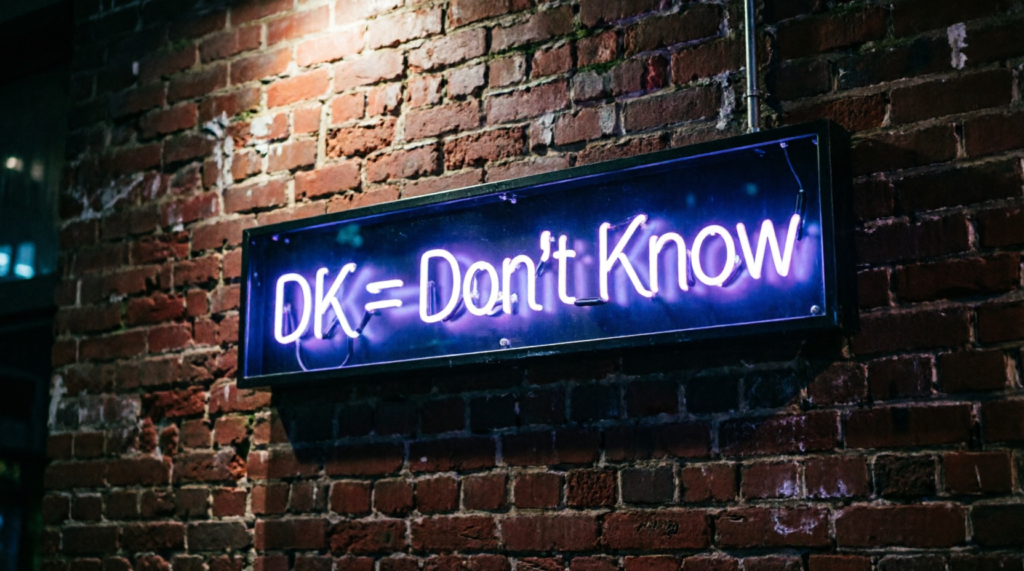
DK is a popular texting abbreviation that usually stands for “Don’t Know.”
It is considered an abbreviation rather than a formal acronym because people pronounce the phrase as “don’t know” instead of saying the individual letters.
In everyday conversations, DK is used when someone doesn’t have information, isn’t sure about something, or doesn’t want to give a definite answer.
For example:
- “What time is the party?”
- “DK yet.”
In this example, the person simply means they don’t know the answer at the moment.
The abbreviation helps people type faster and keep conversations short, especially on mobile devices.
Simple Definition of DK
DK = Don’t Know
Meaning:
- Not sure
- No information available
- Uncertain about something
- Waiting for more details
How People Use DK in Everyday Chat
People often use DK when:
- They haven’t decided yet
- They don’t have the answer
- They forgot information
- They need to check first
Examples:
- “DK what happened.”
- “I DK if I’m free tomorrow.”
- “DK why she left early.”
The meaning remains simple and easy to understand in most conversations.
Where People Use DK
DK appears on many social media platforms and messaging apps.
DK on TikTok
TikTok users often write DK in comments when they don’t know the answer to a question.
Example:
- “Who is this creator?”
- “DK, but they’re funny.”
You’ll also see DK in video captions and replies.
DK on Snapchat
Snapchat conversations are usually fast and casual.
Users commonly respond with DK when discussing plans, events, or mutual friends.
Example:
- “What time are they coming?”
- “DK yet.”
DK on Instagram
Instagram users use DK in direct messages, comments, and story replies.
Example:
- “Where was this photo taken?”
- “DK honestly.”
DK on WhatsApp
WhatsApp chats often include abbreviations because people want quick responses.
Example:
- “Are we meeting today?”
- “DK. Waiting for confirmation.”
DK in SMS Text Messages
Traditional texting is one of the oldest places where DK became popular.
Example:
- “What’s the homework?”
- “DK, I missed class.”
Even today, DK remains widely used in SMS conversations.
Real Chat Examples
Here are 10 realistic examples showing how people use DK in everyday texting.
Example 1
A: Are you coming tonight?
B: DK yet.
A: Let me know when you decide.
Example 2
A: What time does the movie start?
B: DK.
A: I’ll check online.
Example 3
A: Did Jake pass the test?
B: DK honestly.
A: Maybe he’ll tell us later.
Example 4
A: Where is Sarah?
B: DK.
A: I’ve been trying to reach her.
Example 5
A: What are you ordering?
B: DK yet.
A: The pizza looks good.
Example 6
A: Are we off tomorrow?
B: DK.
A: Hopefully.
Example 7
A: Why did they cancel the event?
B: DK.
A: That’s disappointing.
Example 8
A: Did you finish the project?
B: DK if I’ll finish today.
A: Good luck.
Example 9
A: Who won the game?
B: DK. I missed it.
A: Same here.
Example 10
A: What should we watch tonight?
B: DK.
A: Let’s browse Netflix.
How to Reply When Someone Says “DK”
There are many ways to respond depending on the situation.
Funny Replies
- “Thanks for the detective work.”
- “Mystery solved… not.”
- “Very helpful!”
- “Guess we’re both clueless.”
Casual Replies
- “No worries.”
- “That’s okay.”
- “Let me check.”
- “I’ll find out.”
Friendly Replies
- “Thanks anyway.”
- “Tell me if you hear anything.”
- “Let me know later.”
- “Appreciate it.”
Neutral Replies
- “Okay.”
- “Got it.”
- “Understood.”
- “Thanks.”
Is DK Rude or Offensive?
In most situations, DK is not rude or offensive.
It is generally viewed as a neutral abbreviation used to save time while typing.
However, context matters.
If someone asks an important question and receives only “DK,” it may seem short or dismissive, even if no rudeness was intended.
Is It Safe to Use?
Yes.
DK is considered safe and appropriate for casual conversations.
Is It Suitable for School?
Usually yes.
Most teachers and students understand common abbreviations, though full words are better in formal assignments.
Is It Suitable for Work?
It depends.
In professional communication, writing “I don’t know” often appears more polished than simply using DK.
Who Uses This Term?
DK is used by people of many age groups.
However, younger internet users tend to use it more frequently.
Gen Z Usage
Gen Z commonly uses DK because short abbreviations are popular on social media.
The abbreviation fits naturally into fast-moving conversations.
Teenagers
Teenagers often use DK in:
- Group chats
- Snapchat messages
- TikTok comments
- Gaming chats
Adults
Adults also use DK, especially in texting and messaging apps.
Many people who grew up during the rise of SMS texting are familiar with it.
How Common Is It Online?
DK appears regularly across:
- TikTok
- Snapchat
- Discord
- SMS messaging
Although newer slang terms appear every year, DK remains one of the more recognizable texting abbreviations.
Origin of the Term
The exact origin of DK is difficult to pinpoint.
Most evidence suggests it emerged naturally during the early days of internet chat rooms and mobile texting.
When text messages had strict character limits, people started shortening common phrases to save space and type faster.
“Don’t Know” became DK because it was simple, quick, and easy to understand.
Internet Culture Influence
Internet culture helped spread DK across forums, instant messaging platforms, and social networks.
As smartphones became more popular, abbreviations like DK continued to grow.
Is the Origin Certain?
Not completely.
Like many slang abbreviations, DK likely developed gradually through common online use rather than being created by a single person.
Comparison Table
| Term | Meaning | Type | Usage | Popularity |
|---|---|---|---|---|
| DK | Don’t Know | Abbreviation | Expressing uncertainty | High |
| IDK | I Don’t Know | Abbreviation | Direct response to questions | Very High |
| IDC | I Don’t Care | Abbreviation | Showing lack of concern | High |
| IMO | In My Opinion | Acronym | Sharing opinions | High |
| BRB | Be Right Back | Acronym | Temporary absence from chat | High |
DK vs IDK
The biggest difference is that IDK means “I Don’t Know,” while DK simply means “Don’t Know.”
IDK is generally more common online.
Real-World Usage Example
Imagine you’re planning a weekend trip with friends.
One friend asks:
“What time are we leaving on Saturday?”
Another friend hasn’t received the final schedule yet and replies:
“DK yet. Waiting for confirmation.”
In this situation, DK quickly communicates uncertainty without requiring a longer explanation.
This is exactly how the abbreviation is commonly used in everyday conversations.
DK Meaning in Text (Deeper Explanation)
“DK” is a short internet abbreviation that mainly means “Don’t Know.” It is used in casual chats when someone has no information or is unsure about something.
Unlike full sentences, DK is used to save time and keep conversations quick, especially on mobile messaging apps.
DK as a Digital Short Code
DK works like a digital shortcut in online communication.
Instead of typing:
“I don’t know the answer right now,”
people simply type:
“DK”
This makes conversations faster and easier, especially in group chats or gaming chats where speed matters.
Emotional Tone of DK in Messages
DK usually has a neutral tone, but it can feel slightly different depending on context:
- Neutral: simple lack of knowledge
- Slightly distant: short or lazy reply
- Casual: normal everyday usage among friends
Tone depends on how well the people know each other.
DK in Fast-Paced Conversations
In rapid chats (like gaming or live discussions), DK is used to avoid slowing down the conversation.
Example:
A: Where is the enemy?
B: DK
A: Move left quickly!
Here, DK helps keep communication fast and focused.
DK vs Full Sentence Communication
Using DK instead of full sentences has pros and cons:
Pros:
- Saves time
- Easy to type
- Commonly understood
Cons:
- Can feel unclear in formal talks
- May look uninterested in serious discussions
So, DK is best for casual use only.
Psychological Meaning Behind DK Replies
Sometimes DK is not just about information—it can also reflect:
- Lack of interest
- Mental overload
- Quick avoidance of long discussion
- Genuine confusion
So context matters a lot when interpreting it.
DK in Group Chats
In group conversations, DK is often used when:
- No one has the answer
- The topic is unclear
- People are waiting for updates
Example:
A: Who is bringing snacks?
B: DK
C: Same DK here
It shows collective uncertainty.
DK in Academic or Study Chats
Students often use DK in study-related conversations:
- “What came in the exam?”
- “DK, I didn’t check yet.”
It reflects lack of knowledge or missed information.
However, in academic writing, DK is not acceptable.
DK in Online Gaming Communication
Gamers use DK frequently during live gameplay:
- “Where is the enemy spawn?”
- “DK, check map!”
It helps players react quickly without wasting time typing full sentences.
DK in Customer or Service Chats
In informal customer support or peer help chats, DK may appear when:
- Support agent doesn’t have the answer yet
- User asks something outside knowledge range
However, professional support teams usually avoid using abbreviations like DK.
DK in Different Age Groups
Different age groups use DK differently:
- Teens: very common in daily chats
- Young adults: moderate usage
- Older users: less frequent, but still understood
It is mostly part of modern texting culture.
DK Compared to Similar Internet Slang
often confused with similar abbreviations:
- IDK = I don’t know (more common version)
- IDC = I don’t care (different meaning)
- Dunno = informal spoken version
is the shortest version among them.
DK in Social Media Comments
On platforms like TikTok and Instagram:
- Used to answer unknown questions
- Used in reaction comments
- Used when viewers are unsure about content details
Example:
“Where was this filmed?”
“DK but it looks amazing”
When NOT to Use DK
Avoid using DK in:
- Job interviews
- Formal emails
- School assignments
- Professional reports
In these cases, always use full sentences like “I don’t know.”
DK as a Reaction Shortcut in Conversations
DK is often used as a quick reaction instead of a full explanation. Instead of writing long replies like “I’m not sure about that,” people just type “DK.”
It helps keep conversations flowing without delays, especially in fast chats where people expect instant responses.
DK and Its Role in Digital Minimalism
Modern texting culture prefers short and minimal communication. DK fits perfectly into this trend.
It reduces effort while still delivering meaning. Many users choose DK because they want to avoid unnecessary typing and keep messages clean and short.
DK in Uncertain Situations
DK is commonly used when someone is facing uncertainty or incomplete information.
Examples of situations:
- Waiting for confirmation
- Not having updated details
- Forgetting something
- Guessing but not sure
It becomes a safe answer when accuracy is missing.
DK in Informal Decision-Making Chats
When friends are planning something, DK is often used when someone hasn’t decided yet.
Example:
- “Are you joining the trip?”
- “DK, still thinking.”
It shows hesitation without fully rejecting or accepting the idea.
DK as a Neutral Placeholder Reply
Sometimes DK is used as a temporary reply until proper information is available.
Instead of leaving someone unanswered, people reply with DK and update later.
This keeps communication active without giving wrong information.
DK in Online Friendships
In casual online friendships, DK is part of everyday communication style.
It is used to:
- Keep replies short
- Avoid overthinking responses
- Maintain casual tone
Friends often understand DK without needing further explanation.
DK in Emotional Distance Communication
In some cases, DK may show slight emotional distance.
For example:
- When someone is not interested in continuing the topic
- When they want to avoid discussion
- When they feel unsure and disengaged
However, this depends entirely on context and tone.
DK in Group Decision Delays
In group chats, DK is commonly used when decisions are pending.
Example:
- A: “Where should we eat?”
- B: “DK”
- C: “DK too”
This shows collective uncertainty in group planning.
DK in Rapid Mobile Typing Culture
Mobile texting encourages fast typing. DK became popular because it is:
- Only two letters
- Easy to type
- Instantly understood
This makes it ideal for on-the-go communication.
DK in Gaming Voice and Text Chats
Gamers often use DK during fast-paced gameplay situations.
It is used when:
- Map information is unclear
- Enemy location is unknown
- Strategy is undecided
It helps keep communication quick during action.
DK in Informal Problem Solving Chats
In casual problem-solving discussions, DK is used when no solution is available at the moment.
Example:
- “How do we fix this bug?”
- “DK, still checking.”
It signals ongoing effort without giving false answers.
DK as a Time-Saving Expression
One of the biggest reasons DK is popular is time efficiency.
Instead of writing full sentences, users save seconds with just two letters. Across hundreds of messages, this significantly reduces typing effort.
DK in Social Media Reply Culture
On platforms like TikTok, Instagram, and Snapchat, DK is part of comment culture.
It is used when:
- The user doesn’t know the answer
- The content is unclear
- People are guessing without certainty
It helps users stay engaged even without full knowledge.
DK in Casual vs Serious Communication
DK behaves differently depending on context:
- Casual chats → normal and friendly
- Serious discussions → may seem incomplete
- Professional settings → usually avoided
So its appropriateness depends on where it is used.
DK and Misunderstanding Risks
Sometimes DK can lead to misunderstanding because:
- It is too short
- It lacks explanation
- It may seem careless in serious chats
That’s why people often add extra words like “DK yet” or “DK honestly.”
DK in Everyday Digital Language Evolution
DK is part of how internet language keeps evolving.
As communication becomes faster, abbreviations like DK replace longer sentences. It reflects how modern users prefer speed and simplicity over formality.
Frequently Asked Questions
What does DK mean in text messages?
DK usually means “Don’t Know.” It is used when someone does not have an answer or is uncertain.
What does DK mean on TikTok?
On TikTok, DK typically means “Don’t Know” in comments, captions, and replies.
Is DK slang?
Yes. It is a texting abbreviation that has become part of internet slang and online communication.
Is DK rude or offensive?
No. DK is generally neutral and not considered offensive. Context may affect how it is perceived.
How should you reply to DK?
You can reply with phrases like “No worries,” “Okay,” “Thanks,” or “Let me know when you find out.”
Conclusion
DK most commonly means Don’t Know. It’s a simple abbreviation used when someone doesn’t have information or isn’t sure about something.
You’ll often see it in text messages TikTok comments Snapchat chats Instagram messages WhatsApp conversations, and other online platforms.
The term is generally safe friendly and easy to understand. While it’s fine for casual communication using complete phrases may be better in formal school or workplace settings.
Once you know the meaning of DK you’ll have no trouble understanding it whenever it appears in a conversation online.
Discover more post:
| https://meanguid.com/ikk-meaning/ |
| https://meanguid.com/what-does-ons-mean/ |
| https://meanguid.com/ong-slang/ |