If you’ve seen IDGAF in a text message, TikTok comment, Snapchat chat, or Instagram post, it means “I Don’t Give a F*.”** People use it to show they do not care about something, someone’s opinion, or a situation.
The phrase is common across social media and texting platforms because it quickly expresses strong feelings. Some people use it jokingly, while others use it seriously.
Many users search for this slang because they see it online and want to understand whether it’s rude, how it’s used, and when it’s appropriate to say.
In this guide, you’ll learn the meaning of IDGAF, where people use it, real chat examples, how to reply to it, and whether it’s considered offensive.
IDGAF Meaning in Text
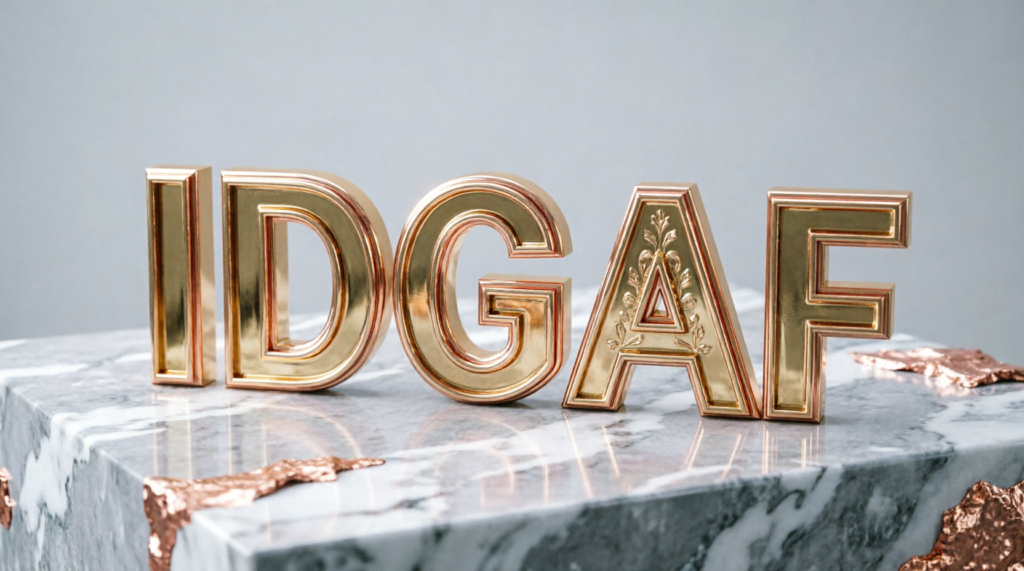
IDGAF stands for “I Don’t Give a F*.”**
It is an internet slang acronym made from the first letters of each word in the phrase.
When someone uses IDGAF in a text conversation, they are usually saying that they don’t care about something. The phrase often shows confidence, frustration, indifference, or a desire to ignore criticism.
For example:
“People keep talking about my haircut, but IDGAF.”
In this case, the person means they don’t care about what others think.
The phrase can sound strong because it contains a swear word, even though the word itself is hidden within the acronym.
Is IDGAF an Acronym or Abbreviation?
IDGAF is an acronym because it is formed from the first letters of multiple words.
Like other internet acronyms such as LOL, BRB, and IDK, it helps people communicate quickly in online conversations.
What Does It Mean in Everyday Chat?
In daily texting, IDGAF usually means:
- I don’t care
- It doesn’t bother me
- I’m ignoring it
- I’m not worried about it
- Other people’s opinions don’t matter to me
The exact meaning depends on the conversation and tone.
Where People Use IDGAF
IDGAF appears on many social media platforms and messaging apps.
TikTok
On TikTok, people often use IDGAF in captions, comments, and videos to show confidence or independence.
Example:
“Everyone hates my outfit but IDGAF.”
Snapchat
On Snapchat, friends may use IDGAF during casual chats when discussing drama, rumors, or opinions.
Example:
“They can say whatever they want. IDGAF.”
Instagram users commonly place IDGAF in captions, stories, and comments.
Example:
“Living my life and IDGAF.”
In WhatsApp conversations, IDGAF is usually used among friends who are comfortable using informal language.
Example:
“The weather ruined the plan, but IDGAF.”
SMS Text Messages
Traditional text messages also include IDGAF when someone wants to express that they are unconcerned about something.
Example:
“I missed the game, but honestly IDGAF.”
Real Chat Examples
Example 1
A: Did you see those comments?
B: Yeah.
A: IDGAF what they think.
Example 2
A: People keep judging your style.
B: That’s fine.
A: IDGAF about their opinions.
Example 3
A: Are you upset about losing?
B: Not really.
A: IDGAF anymore.
Example 4
A: Everyone is talking about the rumor.
B: Seriously?
A: Yep, but IDGAF.
Example 5
A: They unfollowed you.
B: Really?
A: Yeah.
B: IDGAF.
Example 6
A: Aren’t you worried about the criticism?
B: Not at all.
A: IDGAF what strangers say online.
Example 7
A: The movie got bad reviews.
B: I still want to watch it.
A: Same. IDGAF about reviews.
Example 8
A: They laughed at your idea.
B: That’s okay.
A: IDGAF because I believe in it.
Example 9
A: Your post is getting hate comments.
B: I noticed.
A: IDGAF. I’ll keep posting.
Example 10
A: People think you’re wrong.
B: Maybe.
A: IDGAF. I’m sticking with my decision.
How to Reply When Someone Says “IDGAF”
The best response depends on the conversation and your relationship with the person.
Funny Replies
- That’s the spirit.
- Bold choice.
- Confidence level: maximum.
- Well, tell us how you really feel.
Casual Replies
- Fair enough.
- Got it.
- I understand.
- That’s your choice.
Friendly Replies
- As long as you’re happy.
- Do what works for you.
- I support you.
- That’s what matters most.
Neutral Replies
- Understood.
- Okay.
- Makes sense.
- Noted.
Is IDGAF Rude or Offensive?
IDGAF can be considered rude because it represents a phrase containing a swear word.
Whether it sounds offensive depends on the situation, tone, and audience.
When It May Be Acceptable
- Casual chats with friends
- Informal online conversations
- Social media captions
- Humorous discussions
When It May Be Inappropriate
- School assignments
- Professional emails
- Workplace communication
- Formal presentations
- Conversations with people who dislike profanity
Even though the swear word is abbreviated, many people still recognize its meaning immediately.
If you’re unsure whether it’s appropriate, a safer option is simply saying:
- I don’t care
- It doesn’t bother me
- I’m not concerned
Who Uses This Term?
IDGAF is especially popular among younger internet users.
Gen Z Usage
Gen Z frequently uses IDGAF on social media to express confidence, independence, or a carefree attitude.
The phrase often appears in memes, captions, and short-form videos.
Common Age Groups
The term is most commonly used by:
- Teenagers
- Young adults
- Social media users
- Online communities
Older users may also understand it, but they tend to use it less often.
Popular Platforms
You’ll commonly see IDGAF on:
- TikTok
- Snapchat
- X (Twitter)
How Common Is It Online?
IDGAF has been widely used online for many years.
Because it’s short, memorable, and expressive, it continues to appear regularly across social media and messaging platforms.
Origin of the Term
The phrase behind IDGAF existed long before the internet.
People have used the expression “I don’t give a f***” in spoken English for decades to show strong indifference.
As texting and online communication became more popular, users shortened the phrase into IDGAF.
The acronym spread through:
- Online forums
- Chat rooms
- Social media
- Text messaging
- Meme culture
Its exact first use online is difficult to identify, but it became widely recognized during the growth of internet slang in the 2000s and 2010s.
Today, it is one of the most recognizable slang acronyms on the internet.
Comparison Table
| Term | Meaning | Type | Usage | Popularity |
|---|---|---|---|---|
| IDGAF | I Don’t Give a F*** | Acronym | Shows strong indifference | Very High |
| IDK | I Don’t Know | Acronym | Expressing uncertainty | Very High |
| IDC | I Don’t Care | Acronym | Showing lack of concern | High |
| IMO | In My Opinion | Acronym | Sharing opinions | High |
| BRB | Be Right Back | Acronym | Temporary absence | High |
Real-World Usage Example
Imagine a student posts a drawing online.
Some people leave negative comments about the artwork.
A friend asks whether the criticism is upsetting.
The student replies:
“Honestly, IDGAF. I enjoyed creating it.”
In this situation, the student is saying that negative opinions are not affecting their confidence or enjoyment.
IDGAF Meaning Explained Simply
IDGAF is an internet slang acronym made from a longer sentence.
It stands for:
I Don’t Give a F***
In simple words, it means:
- I don’t care at all
- It doesn’t matter to me
- I’m not bothered
- I’m ignoring it completely
It is usually used to show strong confidence or emotional distance from a situation.
IDGAF as Internet Slang
IDGAF is not formal language. It belongs to internet slang culture.
People use it in:
- casual chats
- memes
- social media posts
- reactions to drama or criticism
It is part of a group of expressive acronyms used in fast digital communication.
Emotional Tone Behind IDGAF
The meaning of IDGAF depends on tone. It can express different emotions like:
1. Confidence
Someone feels strong and unbothered.
2. Indifference
They genuinely do not care.
3. Frustration
Used when someone is tired of opinions or drama.
4. Rebellion
Sometimes used to reject rules or expectations.
Situations Where People Type IDGAF
People don’t use IDGAF randomly. It usually appears in specific situations:
Online arguments
When someone is tired of drama.
Social media comments
To ignore negative opinions.
Personal chats
Between friends talking casually.
Meme reactions
To exaggerate humor or attitude.
Platforms Where IDGAF Is Common
You’ll see this slang most on:
TikTok
Used in captions and video reactions.
Snapchat
Used in private chats and streak conversations.
Appears in comments and story captions.
Used in casual friend group chats.
Twitter (X)
Used in short opinion posts or replies.
Hidden Meaning in Conversation
Even though IDGAF is short, it can carry deeper meaning:
- “I refuse to be affected”
- “Your opinion doesn’t change anything”
- “I’m staying confident no matter what”
- “I’ve stopped caring about this situation”
The tone can be playful or serious depending on context.
Why People Use IDGAF Instead of Full Sentence
People prefer IDGAF because:
- It is faster to type
- It feels more expressive
- It fits social media style
- It sounds bold and emotional
- It is widely understood online
Short forms dominate digital communication, and this one is very popular.
IDGAF in Modern Digital Culture
IDGAF is part of Gen Z internet language, where short and expressive phrases dominate communication.
It is often used:
- in memes showing confidence
- in aesthetic captions
- in “don’t care attitude” videos
- in relatable humor posts
It has become more of a cultural expression than just a phrase.
Difference Between IDGAF and Similar Slang
Here’s how it compares with similar expressions:
- IDGAF → strongest form of “not caring”
- IDC → softer version (I don’t care)
- IDK → shows confusion, not attitude
- Whatever → casual dismissal
IDGAF is the most intense version among them.
Is IDGAF Always Negative?
Not always.
It can be:
- Positive → showing confidence
- Neutral → expressing indifference
- Negative → rejecting something angrily
The meaning depends on how it is used in conversation.
How Context Changes Meaning
Same word, different tone:
- “IDGAF, I love my style” → confident and positive
- “IDGAF anymore” → tired or emotional
- “IDGAF what they say” → defensive confidence
Context is everything.
Why IDGAF Became So Popular
It grew because:
- social media encourages short expressions
- people like bold emotional language
- memes spread it quickly
- texting culture prefers abbreviations
- it expresses strong feelings in few letters
Should You Use IDGAF?
It depends on the situation.
Good to use:
- chatting with friends
- informal social media posts
- meme conversations
Avoid using:
- school assignments
- professional emails
- formal discussions
- public respectful communication
It contains hidden profanity, so context matters.
Real-Life Interpretation Example
If someone says:
“I don’t care about the rumors, IDGAF.”
It means:
They are ignoring negativity and choosing not to react emotionally.
Quick Summary
IDGAF is a popular internet slang acronym meaning “I Don’t Give a F*.”**
It is used to show indifference, confidence, or emotional detachment in online conversations.
You’ll see it mostly on TikTok, Snapchat, Instagram, and texting between friends. While it is common in casual speech, it should be avoided in formal or professional settings.
Core Definition of IDGAF in Text
IDGAF is an internet acronym that expresses complete lack of concern.
In simple terms, it means:
- I don’t care about this
- It doesn’t affect me
- I’m ignoring it
- I have no interest in it
It is used when someone wants to show strong emotional distance.
IDGAF as Digital Slang Language
This term belongs to online slang culture, not formal English.
It is part of a group of short expressions used in texting, such as LOL, IDC, and BRB.
People use it because:
- it saves time
- it feels expressive
- it matches social media tone
Situational Meaning of IDGAF
The meaning can shift depending on the situation:
Emotional detachment
Used when someone is unaffected emotionally.
Confidence expression
Shows strong self-belief.
Ignoring negativity
Used when dismissing criticism.
Frustration signal
Sometimes used when annoyed or fed up.
Platforms Where IDGAF Appears
TikTok captions
Used to show attitude or confidence in videos.
Snapchat chats
Used in private conversations with friends.
Instagram posts
Common in bios, captions, and comments.
WhatsApp groups
Used in casual discussions or jokes.
SMS texting
Appears in informal personal messages.
Psychological Meaning Behind IDGAF
Beyond slang, IDGAF often reflects mindset:
- emotional independence
- rejection of social pressure
- confidence in personal choices
- lack of concern for judgment
It can sometimes be used as a defense mechanism.
IDGAF vs Other Short Forms
Here’s how it differs from similar acronyms:
- IDC → mild indifference
- IDK → uncertainty
- IDGAF → strong emotional detachment
- Whatever → casual dismissal
IDGAF is the most intense version.
Common Communication Style with IDGAF
People use it in:
- short replies
- emotional reactions
- meme captions
- comment sections
It usually appears in fast, informal digital communication.
Tone Variations of IDGAF
The same word can sound different:
Calm tone
“I’m not bothered.”
Aggressive tone
“I don’t care at all.”
Funny tone
Used jokingly in memes or banter.
Strong attitude tone
Shows dominance or confidence.
Why IDGAF Became Popular Online
It spread because of:
- social media trends
- meme culture
- short-form communication
- emotional expression online
- Gen Z slang evolution
Its boldness makes it memorable.
Is IDGAF Considered Slang or Formal Language?
IDGAF is strictly informal slang.
It is not used in:
- academic writing
- professional emails
- official communication
It is mainly for casual internet conversations.
Acceptable Usage of IDGAF
Suitable situations:
- chatting with friends
- social media posts
- meme content
- informal replies
Not suitable situations:
- workplace communication
- school assignments
- serious discussions
- customer service messages
Hidden Meaning in Conversations
Depending on context, IDGAF can mean:
- “I’ve stopped caring about this issue”
- “Your opinion doesn’t affect me”
- “I choose not to respond emotionally”
- “This situation is irrelevant to me”
How IDGAF Reflects Internet Culture
It represents modern online behavior where:
- emotions are shortened into acronyms
- communication is fast and expressive
- attitude is often shown through slang
- humor and seriousness blend together
It is part of global internet language evolution.
Real-Life Interpretation Example
If someone says:
“I failed the test, but IDGAF.”
It means:
They are trying to show they are not emotionally affected or stressed about it.
Quick Summary
IDGAF is a popular internet slang acronym meaning “I Don’t Give a F*.”**
It is used to express indifference, confidence, or emotional detachment in online conversations.
It is common on social media platforms like TikTok, Snapchat, and Instagram, but should be avoided in formal or professional settings.
Simple Definition of IDGAF in Text
IDGAF is an internet slang abbreviation that expresses complete lack of concern.
In basic terms, it means:
- I don’t care about this situation
- It doesn’t matter to me
- I’m not emotionally involved
- I choose to ignore it
It is often used when someone wants to show a strong attitude.
IDGAF as an Online Expression
This term belongs to internet communication slang, not formal English.
It is used in:
- chats
- social media posts
- memes
- comments
It reflects how people shorten emotional expressions in digital spaces.
Meaning Based on Attitude
IDGAF can reflect different attitudes:
1. Strong independence
Showing confidence in personal choices.
2. Emotional detachment
Not reacting to drama or criticism.
3. Rejection of opinions
Ignoring what others think.
4. Frustration response
Used when someone is annoyed or tired.
IDGAF in Social Media Communication
On platforms like TikTok and Instagram, IDGAF is often used for:
- captions showing attitude
- comments ignoring hate
- expressive memes
- short emotional reactions
It is part of modern internet tone.
Common Digital Contexts Where It Appears
Public posts
Used to show confidence in front of followers.
Private chats
Used between friends in casual tone.
Comment sections
Used in arguments or debates online.
Meme content
Used for humor and exaggeration.
Emotional Meaning Behind IDGAF
Although it is short, IDGAF can communicate:
- “I am not affected by this”
- “I refuse to care about opinions”
- “This is not important to me”
- “I am emotionally unbothered”
It is often more about attitude than literal meaning.
Variations in Tone
The same phrase can feel different depending on how it is used:
Calm tone
Indicates peaceful indifference.
Bold tone
Shows strong confidence or assertiveness.
Defensive tone
Used to protect self-esteem.
Humorous tone
Used in jokes or memes.
Platforms Where IDGAF Is Popular
- TikTok (captions & comments)
- Snapchat (private chats)
- Instagram (bios & posts)
- WhatsApp (group chats)
- X/Twitter (replies & opinions)
IDGAF Compared to Similar Slang
- IDC → mild indifference
- IDK → lack of knowledge
- Whatever → casual dismissal
- IDGAF → strongest emotional detachment
It is the most intense version among these terms.
Why People Prefer Using IDGAF
People use it because:
- it is short and fast
- it feels expressive
- it matches online slang culture
- it shows strong emotion quickly
- it is widely understood online
Is IDGAF Formal or Informal?
IDGAF is strictly informal language.
It should not be used in:
- school writing
- office communication
- professional emails
- formal conversations
It is meant only for casual digital interaction.
When IDGAF Is Appropriate
Acceptable situations:
- chatting with friends
- social media posts
- meme culture
- informal online discussions
Not acceptable situations:
- professional environments
- academic work
- serious official communication
Hidden Message in Conversations
Depending on context, it can mean:
- “I’m not emotionally affected”
- “I don’t value this opinion”
- “I am choosing not to respond”
- “This issue is irrelevant to me”
Internet Culture Behind IDGAF
IDGAF reflects modern digital communication trends:
- fast messaging style
- emotional expression through acronyms
- meme-driven language
- short-form communication habits
It is part of evolving online language.
Frequently Asked Questions
What does IDGAF mean in text messages?
It means “I Don’t Give a F***” and is used to show that someone does not care about something.
What does IDGAF mean on TikTok?
On TikTok, it usually expresses confidence, independence, or a lack of concern about criticism.
Is IDGAF slang?
Yes. It is a popular internet slang acronym commonly used in texting and social media.
Is IDGAF rude or offensive?
It can be. The acronym represents a phrase containing a swear word, so some people may find it offensive.
How should you reply to IDGAF?
You can respond with phrases like “Fair enough,” “Got it,” “That’s your choice,” or a lighthearted joke depending on the conversation.
Conclusion
IDGAF means I Don’t Give a F*.”** It’s a widely used internet acronym that expresses indifference confidence or a lack of concern about something.
You’ll often see it on TikTok, Snapchat, Instagram, WhatsApp, and in regular text messages. While many people use it casually it still contains a hidden swear word so it’s best avoided in professional academic or formal situations.
Understanding slang like IDGAF helps you follow online conversations more easily and communicate more naturally in digital spaces.
Discover more post:
| https://meanguid.com/su-meaning-in-text |
| https://meanguid.com/bta-meaning-in-text/ |
| https://meanguid.com/iykwim-mean-in-text/ |