WSP means What’s Up? in text messages and online conversations. It’s a casual way of asking someone how they are doing or what they are currently doing.
You’ll often see WSP on TikTok Snapchat Instagram WhatsApp, and regular texting. Many people search for this term because they receive it in a message and want to know how to respond correctly.
The abbreviation is short simple and commonly used in everyday online chats. Understanding it can help you communicate more naturally on social media and messaging apps.
WSP Meaning in Text
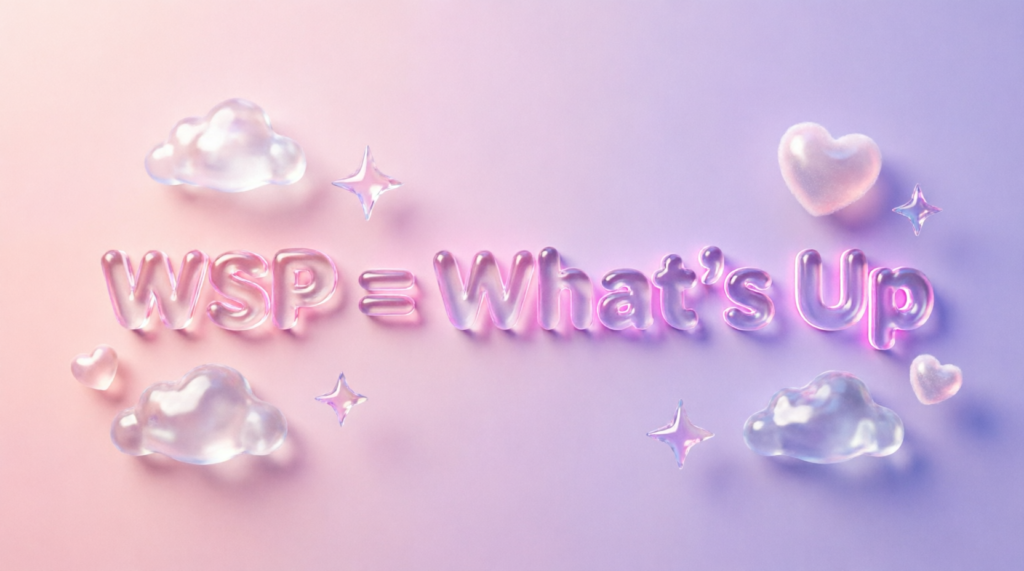
WSP is a popular texting abbreviation that stands for “What’s Up?”
It is considered an internet slang term and shorthand expression rather than a formal acronym. People use it to start conversations quickly without typing the full phrase.
In everyday chats, WSP is simply another way of saying:
- What’s up?
- How are you?
- What’s going on?
- What are you doing?
- How’s everything?
The exact meaning depends on the conversation. Sometimes it is a friendly greeting, while other times it is used to check what someone is doing.
For example:
WSP?
This could mean:
“Hey, what’s going on?”
Or:
“What are you up to right now?”
Because it is short and easy to type, many people prefer using WSP instead of writing the full question.
Where People Use WSP
WSP on TikTok
On TikTok, WSP often appears in comments, captions, and direct messages.
Users may write:
- WSP everyone?
- WSP bro?
- WSP tonight?
It is commonly used to start casual conversations or engage with followers.
WSP on Snapchat
Snapchat users frequently send WSP as a quick opener.
Instead of writing a long message, they simply send:
“WSP?”
This starts a conversation without much effort.
WSP on Instagram
Instagram users use WSP in:
- DMs
- Story replies
- Comment sections
Someone replying to your story may send:
“WSP?”
They are usually asking how you’re doing or what you’re up to.
WSP on WhatsApp
On WhatsApp, WSP works exactly like “What’s up?”
Friends often use it when checking in during the day.
Example:
“WSP, haven’t heard from you in a while.”
WSP in SMS Text Messages
Traditional texting still uses WSP frequently.
It is especially common among younger users who prefer shorter messages and quick conversations.
Real Chat Examples
Example 1
A: WSP?
B: Not much, just watching Netflix.
A: Nice, what are you watching?
Example 2
A: Yo, WSP?
B: Heading home from work.
A: Drive safe.
Example 3
A: WSP tonight?
B: Thinking about grabbing pizza.
A: Count me in.
Example 4
A: WSP bro?
B: Just gaming.
A: Which game?
Example 5
A: WSP?
B: Busy studying.
A: Good luck with your exam.
Example 6
A: Hey, WSP?
B: Nothing special.
A: Want to hang out later?
Example 7
A: WSP today?
B: Going shopping.
A: Have fun.
Example 8
A: WSP?
B: Just got back from the gym.
A: Nice workout?
Example 9
A: WSP this weekend?
B: Visiting family.
A: Sounds good.
Example 10
A: WSP?
B: Just relaxing at home.
A: Same here.
How to Reply When Someone Says “WSP”
There is no single correct response. Your reply depends on the situation.
Funny Replies
- Surviving one day at a time.
- The sky mostly.
- My stress levels.
- Just becoming famous slowly.
- Waiting for payday.
Casual Replies
- Not much, you?
- Just chilling.
- Watching TV.
- Working right now.
- Nothing special.
Friendly Replies
- Hey! Doing great. How about you?
- Just hanging out with friends.
- Everything’s good here.
- Having a pretty good day.
- Glad you messaged.
Neutral Replies
- Not much at the moment.
- Just busy with work.
- Doing fine, thanks.
- Nothing new.
- Same as usual.
Is WSP Rude or Offensive?
No, WSP is generally not considered rude or offensive.
It is a friendly and casual expression used by millions of people online every day.
However, it is usually best suited for informal conversations rather than professional settings.
Safe to Use?
Yes. WSP is generally safe to use with:
- Friends
- Family
- Classmates
- Social media contacts
At School?
In casual conversations with classmates, it is usually acceptable.
At Work?
In professional emails, business meetings, or formal communication, writing “What’s up?” or another professional greeting is usually a better choice.
Context matters. While WSP isn’t offensive, it can appear too casual in formal situations.
Who Uses This Term?
WSP is especially popular among younger internet users.
Gen Z Usage
Gen Z frequently uses abbreviations to communicate quickly.
WSP fits perfectly into modern texting culture because it saves time and feels casual.
Age Groups
The term is commonly used by:
- Teenagers
- College students
- Young adults
- Social media users
Older users may recognize it, but they generally use it less often.
Common Platforms
WSP regularly appears on:
- TikTok
- Snapchat
- Facebook Messenger
- SMS texting
How Common Is It?
WSP is one of the more recognizable texting abbreviations online.
While it may not appear as often as terms like LOL or BRB, it remains widely understood across social media platforms.
Origin of the Term
The exact origin of WSP is difficult to pinpoint.
Like many internet abbreviations, it likely developed as users searched for faster ways to communicate online.
Early chat rooms, text messaging, and instant messaging services encouraged shorter forms of common phrases because typing was slower and character limits were more restrictive.
Over time, “What’s up?” became:
- Wassup
- Sup
- WSP
Social media platforms helped spread the abbreviation even further.
Today, it is recognized by many internet users around the world.
Although the exact creator is unknown, WSP clearly emerged from broader internet and texting culture.
Comparison Table
| Term | Meaning | Type | Usage | Popularity |
|---|---|---|---|---|
| WSP | What’s Up? | Slang abbreviation | Greeting or conversation starter | High |
| IDK | I Don’t Know | Acronym | Expressing uncertainty | Very High |
| IDC | I Don’t Care | Acronym | Showing lack of interest | High |
| IMO | In My Opinion | Acronym | Sharing opinions | High |
| BRB | Be Right Back | Acronym | Temporary absence | Very High |
Real-World Usage Example
Imagine a student finishes school and wants to see what friends are doing later.
Instead of sending a long message, they open Snapchat and send:
“WSP tonight?”
Their friends immediately understand that they are asking what everyone is doing and whether there are any plans.
This simple example shows why WSP remains popular. It is quick, easy, and effective.
Different Meanings of WSP
Although WSP most commonly means “What’s Up?”, internet abbreviations can sometimes have different meanings depending on the context.
In everyday texting and social media conversations, “What’s Up?” is by far the most common definition. However, in certain industries, gaming communities, or technical discussions, WSP may represent something entirely different.
This is why understanding the surrounding conversation is important before assuming the meaning.
For example:
- Text message: WSP = What’s Up?
- Technical discussion: WSP may have a specialized meaning
- Gaming chat: WSP could be used differently depending on the community
In most social situations, you can safely assume WSP means “What’s Up?”
WSP Meaning From a Girl
When a girl sends “WSP,” she is usually starting a casual conversation.
The message often means:
- What are you doing?
- How are you?
- What’s going on?
- Want to chat?
The meaning is generally friendly and informal. It does not automatically indicate romantic interest.
For example:
Girl: WSP?
You: Just finished work. How about you?
The conversation can then naturally continue.
WSP Meaning From a Guy
When a guy sends “WSP,” the intention is usually similar.
He may be:
- Checking in
- Starting a conversation
- Seeing if you’re available
- Asking about your plans
Because the phrase is casual, it can be used between friends, classmates, coworkers, or potential romantic interests.
The exact meaning depends on the relationship and context.
WSP vs What’s Up
Many people wonder whether there is a difference between WSP and the full phrase “What’s Up?”
The answer is simple: they mean the same thing.
The main difference is the level of formality.
WSP is simply the shortened texting version of the full phrase.
Common Variations of WSP
Internet users often modify abbreviations to fit different situations.
Some common variations include:
WSP Bro
A friendly greeting used between friends.
Example:
bro, how’s your day going?”
WSP Man
A casual way to address someone informally.
Example:
man, long time no see.”
WSP Everybody
Used in group chats or social media posts.
Example:
everybody? Hope you’re having a good day.”
WSP Tonight
Used when asking about plans.
Example:
tonight? Anyone free?”
Why Is WSP So Popular?
became popular because online communication rewards speed and simplicity.
People prefer shorter messages because they:
- Save typing time
- Feel more casual
- Start conversations quickly
- Fit mobile messaging habits
As texting culture evolved, abbreviations like LOL, BRB, IDK, and became part of everyday online language.
Today, many users type automatically without even thinking about the full phrase.
When Not to Use WSP
Even though is widely accepted online, there are situations where it may not be appropriate.
Avoid using it in:
- Job applications
- Professional emails
- Academic assignments
- Business communication
- Formal customer service messages
In these situations, complete greetings create a better impression.
Instead of:
You could write:
“Hello, how are you today?”
Signs Someone Is Using WSP to Start a Conversation
Many people send because they want to keep a conversation going.
Some clues include:
- They message you first
- They ask follow-up questions
- They respond quickly
- They continue chatting after your reply
In these cases, acts as a simple conversation starter rather than a serious question.
Most Popular Texting Slang Related to WSP
If you understand , you’ll probably encounter these abbreviations too:
| Slang | Meaning |
|---|---|
| LOL | Laughing Out Loud |
| BRB | Be Right Back |
| IDK | I Don’t Know |
| TBH | To Be Honest |
| TTYL | Talk To You Later |
| IMO | In My Opinion |
| WYD | What Are You Doing |
| WYA | Where You At |
| SMH | Shaking My Head |
| BTW | By The Way |
Learning these terms can make online conversations easier to understand.
Does WSP Mean the Same Thing Worldwide?
In most English-speaking countries, generally means “What’s Up?”
You’ll see it used in:
- United States
- United Kingdom
- Canada
- Australia
- New Zealand
Because social media connects users globally, the abbreviation has spread far beyond these countries and is now recognized by many internet users worldwide.
Quick Summary of WSP
Before ending the article, here’s a simple recap:
- stands for “What’s Up?”
- It is a casual texting abbreviation
- Common on TikTok, Snapchat, Instagram, WhatsApp, and SMS
- Usually used as a greeting or conversation starter
- Not considered rude or offensive
- Best used in informal conversations
- Popular among Gen Z and social media users
How WSP Changes the Tone of a Conversation
Text abbreviations often affect how a message feels, and WSP is no exception.
When someone sends “,” the tone is usually relaxed and informal. It creates a friendly atmosphere because it feels less serious than a full question like “How have you been lately?”
For example:
WSP? feels quick and casual.
How are you doing today? feels more formal and deliberate.
This difference is one reason WSP is so common among friends and social media users.
Can WSP Be Used in Group Chats?
Yes, is frequently used in group conversations.
Instead of messaging each person individually, someone might type:
everyone?”
This invites multiple people to join the discussion at once.
In active group chats, is often used to:
- Start conversations
- Ask about plans
- Check who is online
- Break long periods of silence
Because it is short and open-ended, it works well in groups of any size.
How Often Is WSP Used Online?
remains a common abbreviation across many platforms.
While some internet slang terms fade over time,continues to appear because it serves a simple purpose: starting conversations quickly.
The abbreviation is especially popular among mobile users who prefer short messages.
You are more likely to encounter in direct messages than in public posts because it is mainly used for one-on-one communication.
What Does It Mean If Someone Sends Only “WSP?”
A message containing only usually indicates that the sender wants to start a conversation but does not have a specific topic yet.
They may be:
- Looking for something to talk about
- Checking whether you’re available
- Feeling bored
- Seeing what you’re doing
- Trying to reconnect
The simplicity of the message allows the conversation to go in many directions.
Does Capitalization Matter?
No, capitalization generally does not change the meaning.
These versions all mean the same thing:
- WSP
- wsp
- Wsp
- WsP
Most people type whichever version is fastest.
However, all-capital letters can sometimes feel slightly more energetic or attention-grabbing, depending on the context.
For example:
“WSP!” may feel more enthusiastic than
WSP in Online Gaming Communities
Gamers often use abbreviations to communicate quickly during matches.
WSP sometimes appears in:
- Game chat
- Voice chat text channels
- Discord servers
- Team discussions
In gaming conversations, it usually keeps its standard meaning of “What’s Up?”
A player might message a friend:”WSP, ready for a few matches?”
Because speed matters in gaming, short abbreviations are especially popular.
Why Do People Prefer WSP Over Full Sentences?
Modern communication often prioritizes convenience.
Typing “WSP” requires fewer characters than writing “What’s up?”
Although the difference seems small, people send dozens or even hundreds of messages each day.
Short forms help users:
- Respond faster
- Keep conversations casual
- Reduce typing effort
- Match texting culture
This trend has contributed to the popularity of many abbreviations beyond
How WSP Fits Into Modern Internet Language
Internet language evolves constantly.
Many expressions that began as simple abbreviations eventually became part of everyday communication. WSP belongs to a larger group of internet shorthand terms that help people communicate efficiently.
Other examples include:
- LOL
- OMG
- BTW
- IDK
- WYD
These terms are now widely recognized, even by people who do not use them regularly.
Situations Where WSP Works Best
Although is flexible, some situations are better suited for it than others.
Common examples include:
Catching Up With Friends
After not speaking for a while, sending is an easy way to reconnect.
Making Plans
People often use it when checking whether friends are available.
Starting Daily Conversations
Many users begin casual chats with before discussing other topics.
Social Media Messaging
The abbreviation works naturally in direct messages and story replies.
Can WSP Be Ignored?
Like any message, does not always require an immediate response.
Some people send it casually without expecting a detailed answer.
However, ignoring repeated messages may sometimes be interpreted as disinterest.
If you want to acknowledge the message quickly, simple replies work well:
- Not much.
- Just relaxing.
- Busy right now.
- What’s up with you?
A short response is usually enough to keep the conversation moving.
WSP and Digital Communication Trends
The popularity of abbreviations reflects broader communication trends.
As smartphones became the primary way people communicate, shorter messages became more common.
Users now favor:
- Quick responses
- Informal language
- Shortened words
- Emoji-based communication
fits naturally into this style because it is easy to understand and quick to type.
Common Mistakes People Make About WSP
People who encounter the abbreviation for the first time sometimes misunderstand it.
Some common misconceptions include:
Assuming It Has a Negative Meaning
is generally neutral and friendly.
Thinking It Is a Secret Code
The abbreviation is simply shorthand for “What’s Up?”
Believing It Is Used Only by Teenagers
While younger users may use it more frequently, people of various ages recognize and use the term.
Confusing It With Technical Acronyms
In some professional fields, can have different meanings, but in texting it almost always refers to “What’s Up?”
Future of WSP in Online Communication
Internet slang changes rapidly, but some expressions remain useful for years.
has survived because it serves a practical purpose and is easy to understand.
Even as new slang terms emerge, simple conversation starters tend to remain popular.
For that reason, WSP is likely to continue appearing in text messages, social media conversations, and online communities for the foreseeable future.
Frequently Asked Questions
What does WSP mean in text messages?
usually means “What’s Up?” and is used as a casual greeting or conversation starter.
What does WSP mean on TikTok?
On TikTok, generally means “What’s Up?” and is used in comments, captions, or direct messages.
Is WSP slang?
Yes. is considered internet slang and a texting abbreviation.
Is WSP rude or offensive?
No. It is generally friendly and non-offensive when used appropriately.
How should you reply to WSP?
You can respond with what you’re doing, how you’re feeling, or simply say “Not much, you?”
Conclusion:
WSP stands for What’s Up and is a common texting abbreviation used across social media and messaging platforms. People use it to start conversations check in with friends, or ask what someone is doing.
You’ll most often see it on TikTok Snapchat Instagram WhatsApp, and SMS messages. The term is casual, friendly and widely understood by younger internet users.
While is perfectly fine for everyday chats it may be too informal for professional or business communication. Understanding its meaning can help you respond naturally and confidently whenever you see it online.
Discover more post:
| https://meanguid.com/what-does-lms-mean-texting/ |
| https://meanguid.com/what-does-nsfw-mean-in-text/ |
| https://meanguid.com/dd-meaning-in-text/ |