TFW means That Feeling When or That Feel When. People use it online to describe a specific emotion reaction, or relatable moment. You’ll often see it on TikTok, Snapchat, Instagram X Reddit and in text messages.
Many people search for TFW because they see it in captions comments memes or chats and want to understand what it means. While it looks like an abbreviation it actually helps people express feelings in a short and relatable way.
TFW has become one of the internet’s most recognizable slang terms. It is commonly used to introduce a situation that creates a strong emotional response whether happy funny awkward exciting or disappointing.
In this guide you’ll learn exactly what TFW means where people use it how to reply to it and how it compares to other popular texting abbreviations.
TFW Meaning in Text
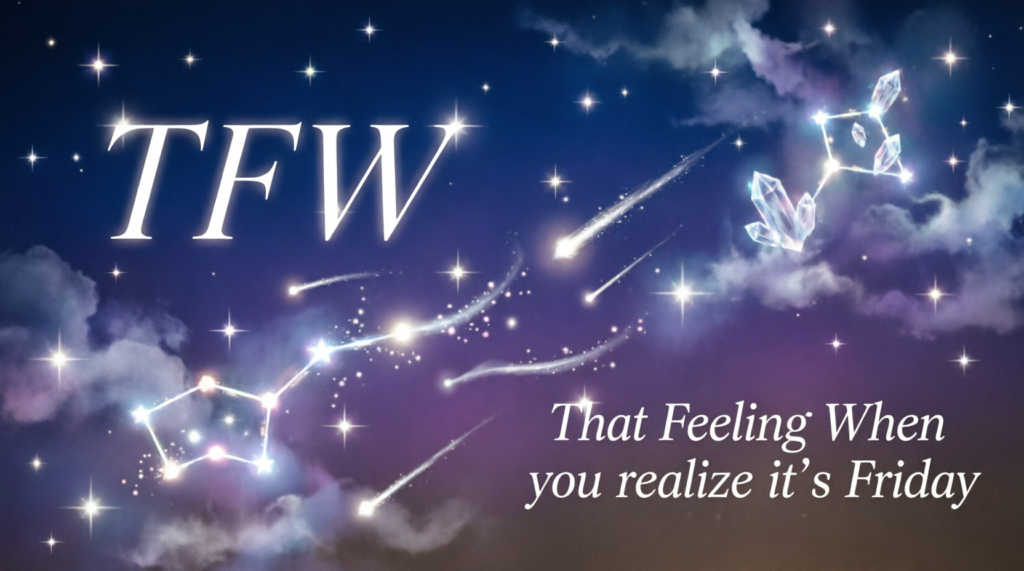
TFW stands for “That Feeling When” or sometimes “That Feel When.”
It is an internet slang expression used to describe a feeling or emotional reaction to a situation.
Unlike many abbreviations that replace entire sentences, TFW introduces a relatable moment. The person uses it to show how a particular situation makes them feel.
Simple Definition
TFW means:
“This is the feeling I get when this happens.”
For example:
TFW your favorite song starts playing in the car.
This means the person is expressing the happiness or excitement they feel in that moment.
Is TFW Slang, an Acronym, or an Abbreviation?
TFW is generally considered an internet slang acronym.
Each letter represents a word:
- T = That
- F = Feeling (or Feel)
- W = When
Although it is technically an acronym, people mostly use it as online slang.
What Does It Mean in Everyday Chat?
In everyday conversations, TFW helps people share emotions without writing long explanations.
Examples:
- TFW you finish your exams.
- TFW the food finally arrives.
- TFW you realize it’s Friday tomorrow.
In each case, the reader understands the emotion from the situation itself.
Where People Use TFW
TFW appears on many social media platforms and messaging apps.
TikTok
On TikTok, people use TFW in captions and comments.
Example:
TFW you learn the dance perfectly on the first try.
It helps make videos more relatable and engaging.
Snapchat
On Snapchat, users add TFW to stories or private messages.
Example:
TFW your best friend replies instantly.
It’s a quick way to describe an emotional reaction.
Instagram users often include TFW in captions, reels, and meme posts.
Example:
TFW the vacation finally starts.
The phrase helps connect with followers who share similar experiences.
In WhatsApp chats, TFW is commonly used among friends.
Example:
TFW you forgot to bring your charger.
The recipient immediately understands the frustration.
SMS Text Messages
Even in regular texting, TFW remains popular.
Example:
TFW you wake up before your alarm.
It’s short, easy to type, and widely understood.
Real Chat Examples
Example 1
A: I finally passed my driving test.
B: Nice!
A: TFW months of practice finally pay off.
Example 2
A: My package arrived today.
B: That’s awesome.
A: TFW online shopping actually arrives early.
Example 3
A: We don’t have school tomorrow.
B: Seriously?
A: TFW surprise holidays happen.
Example 4
A: I found money in my old jacket.
B: Lucky!
A: TFW unexpected cash appears.
Example 5
A: My phone battery died during the movie.
B: Ouch.
A: TFW you forget your charger at home.
Example 6
A: I got front-row concert tickets.
B: No way!
A: TFW your favorite artist is right in front of you.
Example 7
A: The teacher postponed the test.
B: Best news ever.
A: TFW stress disappears instantly.
Example 8
A: I accidentally sent the wrong screenshot.
B: That’s embarrassing.
A: TFW you realize your mistake too late.
Example 9
A: My team won in the final minute.
B: What a game!
A: TFW victory comes out of nowhere.
Example 10
A: I found my lost headphones.
B: Finally!
A: TFW something missing shows up again.
How to Reply When Someone Says “TFW”
There isn’t one correct response. It depends on the context.
Funny Replies
- Mood unlocked.
- That’s way too relatable.
- I felt that through the screen.
- Why is this so accurate?
Casual Replies
- I know exactly what you mean.
- Same here.
- Totally understandable.
- Been there.
Friendly Replies
- That’s awesome.
- Glad that worked out.
- Sounds exciting.
- Happy for you.
Neutral Replies
- Makes sense.
- I understand.
- That’s relatable.
- Good point.
Is TFW Rude or Offensive?
No, TFW is generally not rude or offensive.
It is considered a harmless internet slang term used to describe emotions and experiences.
Is It Safe to Use?
Yes.
Most people use TFW in a positive, humorous, or relatable way.
Is It Appropriate at School?
Usually yes.
Since it doesn’t contain offensive language, it is generally acceptable in casual school conversations.
Is It Appropriate at Work?
In casual workplace chats, it may be acceptable.
However, in formal emails or professional documents, it’s better to use complete sentences instead of internet slang.
Who Uses This Term?
TFW is used by a wide range of internet users.
Age Groups
The term is most common among:
- Teenagers
- Young adults
- Social media users
- Online communities
Gen Z Usage
Gen Z frequently uses TFW in memes, captions, and comments.
It fits well with modern internet humor and relatable content.
Common Platforms
You can find TFW on:
- TikTok
- Snapchat
- X
- Discord
How Often Does It Appear Online?
TFW has been popular for years and still appears regularly across social media platforms.
Although newer slang terms emerge constantly, TFW remains widely recognized.
Origin of the Term
The exact origin of TFW is somewhat unclear.
Most internet historians trace it back to online forums, meme communities, and image boards from the late 2000s and early 2010s.
Internet Culture Influence
TFW became popular through memes that paired emotional situations with reaction images.
Users would write:
TFW you realize it’s the weekend.
The phrase quickly spread because it allowed people to describe feelings in a simple and relatable way.
Is the Origin Certain?
Not entirely.
While the phrase likely evolved through internet communities and meme culture, there is no single confirmed creator.
Like many online slang expressions, it developed organically as people adopted and shared it.
Comparison Table
| Term | Meaning | Type | Usage | Popularity |
|---|---|---|---|---|
| TFW | That Feeling When | Slang Acronym | Expressing emotions and reactions | High |
| IDK | I Don’t Know | Acronym | Showing uncertainty | Very High |
| IDC | I Don’t Care | Acronym | Showing indifference | High |
| IMO | In My Opinion | Acronym | Sharing opinions | High |
| BRB | Be Right Back | Acronym | Leaving a conversation briefly | High |
Real-World Usage Example
Imagine you’re waiting all week for a long weekend.
Friday afternoon finally arrives, and your last class ends.
You text your friend:
TFW it’s finally the weekend.
Your friend instantly understands the excitement and relief you’re feeling without needing a long explanation.
That’s exactly why remains popular—it communicates emotions quickly and effectively.
Why Is TFW So Popular Online?
TFW has remained popular for years because it helps people express emotions in a quick and relatable way. Instead of writing a long explanation about how they feel, users can simply start a sentence with and let the situation speak for itself.
Internet culture thrives on shared experiences. Whether someone is talking about school, work, relationships, gaming, or daily life, makes it easy for others to relate. This is one reason the term continues to appear across social media platforms.
For example:
- TFW your favorite team wins the championship.
- TFW you remember an assignment is due tomorrow.
- TFW your food arrives after a long wait.
Each example instantly creates an emotional connection with readers.
Different Emotions Expressed Through TFW
One interesting thing about is that it can represent almost any emotion.
Happiness
People often use when sharing exciting or joyful moments.
Example:
you get accepted into your dream college.
Relief
The phrase is also common when describing a stressful situation that finally ends.
Example:
the exam is finally over.
Embarrassment
Many internet users use to laugh at awkward situations.
Example:
TFW you wave back at someone who wasn’t waving at you.
Frustration
TFW can also highlight annoying everyday experiences.
Example:
your internet stops working during a video call.
Surprise
Unexpected events often inspire posts.
Example:
you discover your favorite show has a new season.
TFW in Memes and Internet Humor
became especially popular because of memes.
Many meme creators pair the phrase with funny images, reaction photos, or screenshots. The combination creates humor because viewers instantly understand the emotion being described.
For example, a meme might show a shocked face with the caption:
you realize today is Monday.
The humor comes from the shared experience. Most people understand the disappointment associated with the start of the workweek.
This meme format helped spread throughout internet culture and social media.
Common TFW Examples People See Online
If you spend time online, you’ll likely encounter TW in many different contexts.
Popular examples include:
- TFW your battery reaches 1%.
- TFW you finish a difficult project.
- TFW your crush likes your post.
- TFW you find money in your pocket.
- TFW your package arrives earlier than expected.
- TFW you forget your password.
- TFW the teacher cancels homework.
- TFW your alarm doesn’t go off.
These examples show how flexible the phrase can be.
When Should You Use TFW?
works best in casual conversations and social media content.
You can use it when:
- Sharing a personal experience
- Creating memes
- Writing social media captions
- Texting friends
- Commenting on relatable posts
The phrase is especially useful when you want to emphasize an emotion without explaining it in detail.
Good Example
you finally solve a problem after hours of trying.
Less Suitable Example
Using in a formal business report would seem out of place because internet slang is generally reserved for informal communication.
When Should You Avoid Using TFW?
Although TFW is widely understood online, there are situations where it may not be appropriate.
Consider avoiding it in:
- Professional emails
- Job applications
- Academic papers
- Business presentations
- Formal workplace communication
Not everyone is familiar with internet slang, particularly in professional settings. Using clear language is often the safer choice.
TFW vs Traditional Emotional Expressions
Before internet slang became popular, people typically described emotions with complete sentences.
For example:
Traditional:
“I feel relieved because my project is finished.”
version:
“TFW you finally submit your project.”
Both communicate a similar idea, but the version is shorter and feels more conversational.
This simplicity is one reason why younger internet users often prefer it.
Similar Slang Terms Related to TFW
Many internet abbreviations help users express emotions and reactions.
FOMO
Fear Of Missing Out.
Used when someone worries about missing an event or experience.
SMH
Shaking My Head.
Used to show disappointment or disbelief.
IMO
In My Opinion.
Used when sharing a personal viewpoint.
NGL
Not Gonna Lie.
Used before making an honest statement.
TBH
To Be Honest.
Used when expressing a genuine opinion.
Like , these abbreviations make online communication faster and more casual.
Does TFW Still Matter in 2026?
Yes, continues to be recognized across social media and online communities.
While new slang appears every year, many internet users still understand and use because it has become part of long-term internet culture.
You may not see it as frequently as some trending expressions, but it remains a familiar phrase that many people recognize immediately.
Its simple structure, emotional appeal, and adaptability have helped it remain relevant even as online language continues to evolve.
Fun Facts About TFW
- is one of the most recognizable internet reaction phrases.
- It became famous through meme culture.
- The phrase can describe positive or negative emotions.
- People of different age groups understand it, although younger users use it more often.
- can be used without punctuation and still be understood.
- It often appears alongside reaction images and GIFs.
- The phrase has survived multiple generations of internet slang.
Signs Someone Is Using TFW Correctly
A person is usually using correctly when:
- They are describing a feeling or reaction.
- The situation is relatable.
- The phrase introduces an emotional moment.
- The message is informal and conversational.
Example:
TFW you realize tomorrow is a holiday.
The sentence immediately communicates excitement and relief without directly stating those emotions.
How TFW Changes the Tone of a Message
One reason became so popular is that it changes the tone of a message instantly. Instead of sounding serious or formal, it makes a statement feel more personal and relatable.
Compare these examples:
Without TFW:
“I was really excited when my package arrived.”
With TFW:
your package arrives three days early.”
The second version feels more conversational and invites others to share the same emotion.
Because of this, is often used to create a stronger connection with readers and followers.
Why People Relate to TFW Posts
posts often go viral because they focus on common experiences.
People enjoy content that makes them think:
- “I’ve done that too.”
- “That happened to me.”
- “I know exactly how that feels.”
Whether it’s forgetting a password, finding extra money, or finishing a difficult task, relatable content tends to receive more likes, comments, and shares.
This is one reason creators frequently use in captions and memes.
TFW in Gaming Communities
Gamers use regularly to describe reactions during gameplay.
Common gaming examples include:
- TFW you defeat the final boss on your first try.
- TFW your internet disconnects during a ranked match.
- TFW you unlock a rare item.
- TFW your teammate saves the game at the last second.
Gaming communities enjoy TFW because it captures emotions that many players experience.
You’ll often see it on Discord servers, gaming forums, Reddit threads, and livestream chats.
TFW in School and Student Life
Students frequently use TFW because school creates many relatable situations.
Examples include:
- TFW the teacher announces a surprise quiz.
- TFW you finish your last exam.
- TFW summer vacation finally starts.
- TFW you realize you studied the wrong chapter.
These situations create strong emotional reactions, making a natural fit for student conversations.
TFW in Workplace Conversations
While is less common in professional settings, it still appears in casual workplace chats.
For example:
- TFW the meeting ends earlier than expected.
- TFW you finally clear your inbox.
- TFW payday arrives.
- TFW your project gets approved.
Employees may use the phrase in group chats, workplace memes, or informal messages between coworkers.
However, it is generally avoided in official business communication.
How TFW Is Used in Captions
Social media users often place at the beginning of a caption.
This format quickly tells viewers what emotion they should expect.
Examples:
- your vacation begins tomorrow.
- you hear your favorite song unexpectedly.
- the weekend arrives after a stressful week.
The phrase works especially well with photos, videos, reaction images, and short-form content.
Why TFW Works Well With Reaction Images
Reaction images became a major part of internet culture long before short videos dominated social media.
pairs perfectly with reaction images because the caption explains the situation while the image shows the emotion.
For example:
Caption:
you realize you left your wallet at home.
Image:
A shocked or frustrated facial expression.
Together, they create a message that is easy to understand and often humorous.
The Psychology Behind TFW
From a communication perspective, works because humans naturally respond to emotional storytelling.
Instead of directly saying:
“I am happy.”
The phrase creates a scenario that allows readers to imagine the feeling themselves.
This makes communication more engaging and memorable.
People often react more strongly to situations than to direct emotional statements, which helps explain why remains popular.
Can TFW Be Used Sarcastically?
Yes.
Many people use sarcastically to make jokes or exaggerate situations.
Example:
you spend two hours looking for something that was in your pocket the whole time.
The phrase highlights the absurdity of the situation and adds humor.
Sarcastic posts are common in memes and social media comments.
TFW and Modern Internet Language
Internet communication continues to become faster and more visual.
Abbreviations like help users communicate emotions with fewer words.
Modern online language often values:
- Speed
- Simplicity
- Relatability
- Humor
fits all four of these qualities, which explains its long-lasting popularity.
Even users who rarely type the phrase often recognize it immediately.
Variations of TFW You May Encounter
Although TFW is the most common version, there are similar formats online.
MFW
My Face When
Used to describe a facial reaction.
Example:
MFW someone eats my leftovers.
MRW
My Reaction When
Used to describe a reaction to an event.
Example:
MRW the teacher cancels class.
When You…
Some users skip abbreviations entirely.
Example:
When you realize tomorrow is Friday.
This style became popular in meme culture and serves a similar purpose.
How Brands and Influencers Use TFW
Some brands use in marketing because it feels casual and relatable.
For example, a food company might post:
TFW the pizza finally arrives.
An influencer might write:
TFW your travel plans become reality.
Using internet slang helps brands connect with younger audiences and create content that feels less formal.
Most Common Mistakes People Make With TFW
Using It in Formal Writing
is best suited for casual communication.
Using it in professional reports or academic assignments can appear unprofessional.
Explaining the Emotion Twice
Incorrect:
you finish work and feel relieved because you’re relieved.
Correct:
you finally finish work for the week.
The situation already implies the emotion.
Using It Without a Relatable Situation
The phrase works best when readers can easily understand the feeling being described.
The more relatable the situation, the more effective the message becomes.
Will People Understand TFW?
In most online communities, yes.
People who regularly use social media, texting apps, gaming platforms, or meme pages are likely familiar with the term.
Older users who do not spend much time online may not immediately recognize it, but younger internet users generally understand it without explanation.
Because has been around for many years, it has become one of the more widely recognized pieces of internet slang.
The Future of TFW
Internet slang changes constantly, but some expressions remain part of online culture for years.
has survived multiple social media trends because it serves a simple purpose: expressing emotions in a relatable way.
As long as people continue sharing experiences through memes, captions, comments, and text messages, TFW is likely to remain a recognizable part of online communication.
Frequently Asked Questions
What does TFW mean in text messages?
TFW means “That Feeling When.” It is used to describe an emotional reaction to a situation.
What does TFW mean on TikTok?
On TikTok, TFW is commonly used in captions and comments to describe relatable moments or feelings.
Is TFW slang?
Yes. TFW is considered internet slang and is widely used across social media platforms.
Is TFW rude or offensive?
No. TFW is generally harmless and not considered offensive.
How should you reply to TFW?
You can respond with reactions such as:
- Same.
- So relatable.
- I know that feeling.
- Totally understand.
Conclusion:
TFW stands for That Feeling When and is a popular internet slang expression used to describe emotions reactions and relatable situations.
People commonly use it on TikTok Snapchat Instagram WhatsApp and in text messages. It helps communicate feelings quickly without writing long explanations.
The term is generally friendly safe and appropriate for casual conversations. However it may be best avoided in formal professional communication.
Now that you know what means you’ll be able to understand it whenever it appears in memes captions comments or everyday chats.
Discover more post:
| https://meanguid.com/nmms-meaning/ |
| https://meanguid.com/what-does-awl-mean/ |
| https://meanguid.com/what-does-mfw-mean/ |