If you’ve seen LCR on Instagram and wondered what it means you’re not alone. In most social media conversations LCR stands for Like Comment and Repost” (or Like Comment and React depending on the platform).
People often use this abbreviation on Instagram, TikTok, Snapchat, and in texting when they want others to engage with their content. Many users search for the meaning because internet slang changes quickly, and abbreviations can have different meanings depending on the context.
Understanding what LCR means can help you avoid confusion and interact more naturally online.
LCR Meaning in Text
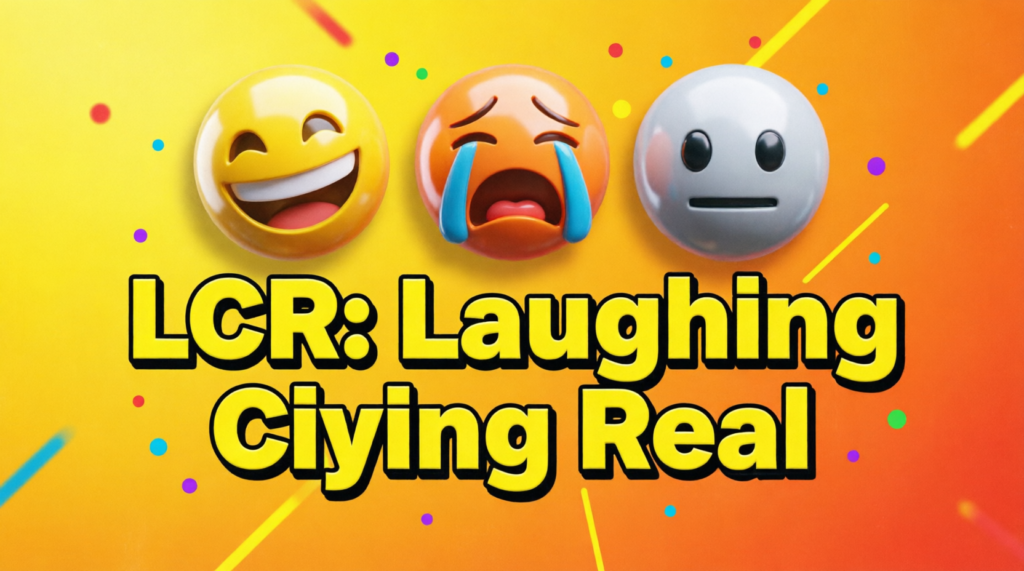
LCR is a common internet abbreviation that usually means Like, Comment, and Repost.
It is not a traditional word. Instead, it is an acronym made from the first letters of three actions people often want others to perform on social media content.
When someone writes “LCR” in a caption, story, comment, or message, they are typically encouraging others to:
- Like their post
- Leave a comment
- Repost or share the content
In everyday online conversations, LCR is often used to boost engagement. Content creators, influencers, and regular users may use it when they want more interaction on a photo, video, or story.
For example:
“New post is up! LCR if you enjoyed it.”
In this case, the person is asking followers to like, comment, and repost the content.
Is LCR Slang?
LCR is more of an internet acronym than traditional slang.
However, because it is commonly used in casual online communication, many people consider it part of modern social media slang.
What Does It Mean in Everyday Chat?
In normal conversations, LCR usually acts as a request for support or engagement.
Someone might message:
“LCR my latest reel.”
They simply want friends or followers to interact with their content.
Where People Use LCR
LCR on TikTok
TikTok creators often use LCR to encourage engagement on videos.
A creator might write:
“LCR if this made you laugh.”
This helps increase interaction and visibility.
LCR on Snapchat
On Snapchat, LCR may appear in stories or group chats.
Users sometimes ask friends to LCR content they have shared on other social media platforms.
LCR on Instagram
Instagram is one of the most common places where LCR appears.
You might see it in:
- Story captions
- Reels
- Photo posts
- Comments
- Direct messages
Many users write LCR when promoting a new post or reel.
LCR on WhatsApp
People occasionally use LCR in group chats when sharing social media links.
The goal is usually to encourage friends to engage with the shared content.
LCR in SMS and Text Messages
Although less common, LCR can also appear in regular text messages.
Someone may text friends asking them to support a post by liking, commenting, and reposting it.
Real Chat Examples
Example 1
A: I just uploaded a new reel.
B: Nice! What’s it about?
A: Travel highlights. LCR if you get a chance.
Example 2
A: Did you see my latest photo?
B: Not yet.
A: Check it out and LCR please.
Example 3
A: My video finally hit 5k views.
B: That’s awesome.
A: Thanks! Keep the LCR coming.
Example 4
A: I posted something funny today.
B: Really?
A: Yep, go LCR it.
Example 5
A: Can you help boost my post?
B: Sure.
A: Just LCR when you see it.
Example 6
A: New gaming clip is live.
B: I’ll watch it.
A: Great, don’t forget to LCR.
Example 7
A: Why is everyone commenting LCR?
B: They’re asking for engagement.
A: Oh, that makes sense.
Example 8
A: I need more reach on this post.
B: How can I help?
A: Just LCR it.
Example 9
A: Did my reel show up on your feed?
B: Yes.
A: Awesome. LCR if you liked it.
Example 10
A: I spent hours editing this video.
B: I can tell.
A: Thanks. LCR and share it around.
How to Reply When Someone Says “LCR”
There are many ways to respond depending on the situation.
Funny Replies
- Only if you promise not to charge me.
- LCR completed. Where’s my reward?
- Done. Expecting celebrity treatment now.
- Mission accomplished.
Casual Replies
- Sure, I’ll check it out.
- No problem.
- Done already.
- I’ll support it.
Friendly Replies
- Of course, happy to help.
- I got you.
- I’ll engage with it now.
- Good luck with your post.
Neutral Replies
- Okay.
- Noted.
- I’ll take a look.
- Thanks for sharing.
Is LCR Rude or Offensive?
LCR is generally not considered rude or offensive.
It is a neutral internet abbreviation used to encourage engagement.
Most people view it as a simple request rather than an insult or inappropriate term.
That said, constantly asking people to LCR every post may become annoying to some followers.
Is It Safe to Use?
Yes. In most contexts, LCR is safe to use online.
Is It Appropriate at School or Work?
It depends on the environment.
For casual conversations, it is usually fine.
In professional emails, business meetings, or formal workplace communication, it may seem too informal.
Who Uses This Term?
LCR is most commonly used by:
- Teenagers
- Young adults
- Content creators
- Influencers
- Social media marketers
Gen Z Usage
Gen Z users frequently use abbreviations like LCR because they make communication faster and fit naturally into social media culture.
Common Platforms
The term appears most often on:
- TikTok
- Snapchat
- Messaging apps
How Often Does It Appear Online?
LCR is less common than abbreviations such as LOL or IDK, but it appears regularly among users focused on social media engagement.
Origin of the Term
The exact origin of LCR is not completely clear.
Like many internet abbreviations, it likely developed as social media platforms became more engagement-focused.
As creators looked for quick ways to encourage interaction, shortened phrases became popular.
Instead of repeatedly writing “Like, Comment, and Repost,” users began using the shorter acronym LCR.
This follows the same pattern as many other internet abbreviations that simplify communication.
Because internet slang evolves quickly, different communities may occasionally interpret LCR slightly differently. However, the engagement-related meaning remains the most widely recognized.
Comparison Table
| Term | Meaning | Type | Usage | Popularity |
|---|---|---|---|---|
| LCR | Like, Comment, and Repost | Acronym | Social media engagement | Moderate |
| IDK | I Don’t Know | Acronym | Casual conversations | Very High |
| IDC | I Don’t Care | Acronym | Informal texting | High |
| IMO | In My Opinion | Acronym | Sharing opinions | High |
| BRB | Be Right Back | Acronym | Chat and messaging | High |
Real-World Usage Example
Imagine a college student uploads a new Instagram reel showing highlights from a recent trip.
After posting it, they send a message to friends:
“Just uploaded my travel reel. LCR if you have time.”
Their friends then like the reel, leave comments, and share it with others.
In this situation, LCR acts as a quick request for support and engagement.
LCR as an Instagram Engagement Strategy
LCR is not just slang—it’s actually part of a growth strategy on Instagram.
Creators use it to:
- Increase post visibility
- Improve algorithm reach
- Get more comments and saves
- Boost profile activity
When engagement increases, Instagram is more likely to push the post to Explore or Reels feeds.
So, LCR is basically a quick shortcut for “please interact with this content.”
LCR in Instagram Captions vs Stories vs DMs
1. LCR in Captions
Used under posts or reels.
Example:
“New outfit drop 🔥 LCR if you like this look.”
It’s public and meant for all followers.
2. LCR in Stories
Often more casual and direct.
Example:
“New reel is up! LCR ❤️”
Stories feel more personal, so people expect quicker responses.
3. LCR in DMs
More private and targeted.
Example:
“Hey, I posted something. Can you LCR it?”
This is usually sent to friends or loyal followers.
Why People Prefer Saying “LCR” Instead of Full Words
People don’t write “Like, Comment, and Repost” because:
- It’s faster to type
- It fits better in captions
- It looks cleaner visually
- It matches internet culture style
- It feels more “creator-friendly”
Short forms are common on Instagram, so LCR blends naturally into content.
Algorithm Connection: Why LCR Matters
Instagram’s algorithm reacts strongly to engagement signals.
When someone does LCR actions:
- Likes = basic engagement signal
- Comments = strong engagement signal
- Reposts/shares = viral boost signal
Together, these actions can significantly improve reach.
That’s why influencers often encourage LCR right after posting.
Different Interpretations of LCR (Context Matters)
Although the main meaning is engagement-based, context can slightly change interpretation:
- Like, Comment, Repost → Instagram meaning (most common)
- Like, Comment, React → used on some platforms
- Rarely, people confuse it with technical or unrelated acronyms, but that is not social media usage
So, context is everything when decoding LCR.
Signs a Post is Asking for LCR
You can easily identify it when you see phrases like:
- “Show some love”
- “Engage please”
- “Support my post”
- “Don’t forget to interact”
- “Drop a like and comment”
If LCR appears, it’s usually part of this same pattern.
Hidden Purpose Behind Using LCR
Beyond engagement, LCR is also used for:
- Building audience loyalty
- Testing content performance
- Encouraging community interaction
- Growing new accounts faster
- Strengthening creator-follower relationships
It’s not just a random abbreviation—it’s part of how social media growth works.
LCR vs Normal Engagement Requests
| Type | Example | Tone | Effect |
|---|---|---|---|
| LCR | “LCR this post” | Short & casual | High engagement |
| Full request | “Please like, comment, and repost” | Formal | Less common |
| Friendly ask | “Support my post please” | Soft | Moderate engagement |
LCR is the most compact version of all.
When LCR is Most Effective on Instagram
LCR works best when:
- A post is newly uploaded
- Audience is active online
- Content is visually strong
- Caption includes a clear request
- Creator already has engaged followers
Timing matters as much as wording.
Psychological Reason People Respond to LCR
People often respond to LCR because of:
- Social connection (supporting friends)
- Reciprocity (they expect return support)
- Curiosity (checking new content)
- Habit (scrolling and double-tapping naturally)
It feels like a casual request, not pressure.
LCR in Meme Culture and Comments
Sometimes LCR appears in funny ways:
- “LCR or unfollow 😭”
- “If you don’t LCR, I’m crying”
- “LCR or you owe me snacks”
This shows how slang evolves into humor on Instagram.
Mistakes People Make with LCR
Common misunderstandings:
- Thinking it’s a serious command
- Using it in formal business pages
- Overusing it in every post
- Sending it to strangers aggressively
Too much LCR can reduce authenticity.
Professional Use of LCR (Brands & Pages)
Small brands sometimes use LCR-like strategies to:
- Promote product posts
- Increase page engagement
- Drive traffic to new launches
However, bigger brands often avoid slang to maintain professionalism.
Should You Use LCR on Instagram?
Use it if:
- You are posting casually
- You want engagement from friends or followers
- You run a personal page or creator account
Avoid it if:
- You run a formal business brand
- You are writing professional content
- Your audience prefers serious tone
Deeper Breakdown Uses & Hidden Contexts
On Instagram, LCR generally stands for “Like, Comment, and Repost.” It is a quick way people ask others to engage with their posts. You’ll see it in captions, reels, stories, and DMs when someone wants more visibility and interaction.
But beyond the basic meaning, LCR has several layers depending on how and where it is used. Below is a deeper, non-repetitive breakdown.
LCR as a Signal for Content Reach Boosting
LCR is often used as a reach booster trigger.
When a post gets:
- Likes
- Comments
- Shares/Reposts
Instagram’s system reads it as “interesting content” and may distribute it to more users.
So creators use LCR as a way to:
- Push content into Explore
- Improve reel performance
- Increase early engagement signals
- Compete with algorithm timing
It’s less about wording and more about triggering early activity quickly.
LCR in Creator Growth Psychology
Many Instagram creators rely on LCR because of basic audience behavior patterns.
It works because:
- Followers like simple instructions
- People are more likely to engage when told directly
- Short prompts reduce hesitation
- It creates a “community support” feeling
In short, LCR reduces the mental effort needed to interact.
LCR in Viral Content Cycles
LCR often appears in posts that are already trying to go viral.
Typical cycle:
- Post goes live
- Creator adds LCR request
- Early followers engage
- Instagram boosts reach
- New audience joins
This makes LCR part of early viral momentum strategy rather than just slang.
Different Emotional Tones Behind LCR Usage
LCR doesn’t always feel the same. Tone changes meaning:
Friendly Tone
“LCR if you like this vibe 😊”
→ Soft request, casual interaction
Urgent Tone
“LCR NOW 🔥”
→ Strong push for immediate engagement
Emotional Tone
“LCR it means a lot ❤️”
→ Emotional connection with audience
Humorous Tone
“LCR or I delete my account 😂”
→ Joke-based engagement bait
LCR in Micro-Communities on Instagram
In niche Instagram communities (fitness, travel, fashion, gaming), LCR is used differently:
- Fitness pages → “LCR if you’re working out today”
- Travel pages → “LCR if you want to visit here”
- Fashion pages → “LCR if you like this outfit”
- Gaming pages → “LCR if you play this game”
Each niche uses LCR to build identity-based engagement.
LCR as a Shortcut for Engagement Culture
Instagram is built on interaction, and LCR is part of that culture.
Instead of saying:
“Please engage with my post,”
people say:
“LCR”
It reflects how social media communication has evolved into:
- Short forms
- Speed-based language
- Minimal typing culture
- Visual-first communication
LCR is just one example of this shift.
LCR in Private vs Public Communication
Public Posts
Used to increase visibility:
- Captions
- Reels
- Comments
Private Chats
Used as personal support requests:
- Friends asking for help boosting posts
- Small creators sharing content with close circle
- Group chats supporting each other
Private use of LCR is more direct and personal.
LCR and Engagement Pressure Effect
One interesting side effect of LCR is social pressure.
Some users may feel:
- Obligated to like or comment
- Guilt if they ignore it
- Pressure in friend groups
That’s why some people prefer subtle engagement instead of explicit LCR requests.
LCR vs Organic Engagement (Important Difference)
| Type | LCR Posts | Organic Posts |
|---|---|---|
| Engagement Style | Requested | Natural |
| Audience Reaction | Prompt-based | Interest-based |
| Growth Speed | Faster initially | Slower but stable |
| Content Feel | Promotional | Authentic |
Both can work, but Instagram tends to reward real interaction quality, not just requests.
Misinterpretation of LCR on Instagram
Some users misunderstand LCR as:
- A command
- A trend hashtag
- A spam phrase
- A meaningless abbreviation
In reality, it’s just a structured engagement request, not a trend or meme by itself.
Why Influencers Still Use LCR in 2026
Even with algorithm changes, LCR is still used because:
- It works for new accounts
- It increases early engagement
- It keeps followers active
- It is simple and universal
- It fits short attention spans
It remains relevant in fast-paced content cycles.
LCR in Algorithm-Friendly Posting Strategy
LCR is often paired with other strategies like:
- Posting at peak time
- Using trending audio
- Adding hashtags
- Writing strong hooks
- Posting reels instead of images
It is one small part of a bigger content optimization system.
Subtle Alternatives to LCR
Not everyone uses LCR directly. Some alternatives include:
- “Double tap if you agree”
- “Drop a comment below”
- “Share this with a friend”
- “Save this post”
- “What do you think?”
These feel softer but achieve the same purpose.
LCR as Part of Instagram Engagement Language System
Instagram has developed its own “micro-language” where users rely on short codes instead of full sentences.
LCR belongs to this system along with phrases like:
- “DM me”
- “F4F”
- “SFS”
- “Save this”
These shortcuts exist because Instagram communication is:
- Fast-paced
- Mobile-first
- Attention-limited
So LCR is not just slang—it’s part of a compressed communication style.
LCR in Algorithm Timing Strategy
One overlooked use of LCR is timing control for engagement spikes.
Creators often use it:
- Within the first 30–60 minutes of posting
- When they want “early traction”
- Before the post loses freshness
This early engagement window helps signal Instagram that the post is worth distributing further.
So LCR is often used as a trigger during the algorithm’s “testing phase.”
LCR as Social Proof Generator
LCR is also used to create social proof momentum.
When users see:
- Many likes
- Active comments
- Shares/reposts
They are more likely to join the interaction.
So LCR indirectly helps build:
- Popularity perception
- Trust in content
- Curiosity among new viewers
It’s not just engagement—it’s visibility psychology.
LCR in Influencer-Follower Dynamics
In influencer culture, LCR plays a role in relationship building.
It signals:
- “I value your support”
- “Be part of my growth”
- “Engage with my journey”
Followers who regularly LCR content often become:
- Loyal supporters
- Repeat engagers
- Community members
So LCR helps maintain a creator-audience feedback loop.
LCR in Content Monetization Strategy
For monetized accounts, LCR indirectly supports income growth.
Higher engagement can lead to:
- Better brand deals
- Higher ad visibility
- Increased reach
- More sponsored opportunities
So creators use LCR not just for likes, but for financial growth signals.
LCR in Different Content Types
Reels
Used to boost viral reach:
“LCR if you relate 🔥”
Carousel Posts
Used to increase saves and swipes:
“LCR if slide 3 hit you”
Stories
Used for quick reactions:
“New story up — LCR ❤️”
Memes
Used for humor engagement:
“LCR or I delete this meme 😂”
Each format uses LCR differently depending on engagement goal.
LCR in Friend Group Culture
Outside influencers, LCR is common in friend circles.
It is used when:
- Friends support each other’s posts
- Small accounts try to grow together
- Group chats share content
Example behavior:
“Everyone LCR my post please 🙏”
This creates a mutual support loop among peers.
LCR and Engagement Fatigue Problem
Too much LCR usage can cause audience burnout.
Users may feel:
- Repeated requests are annoying
- Content feels less authentic
- Engagement becomes forced
This is why experienced creators mix:
- Organic posts
- Soft engagement requests
- Occasional LCR usage
Balance matters more than frequency.
LCR vs Silent Engagement Posts
Some posts avoid LCR completely and rely on natural engagement.
| Style | LCR Posts | Silent Posts |
|---|---|---|
| Approach | Direct ask | No request |
| Engagement | Prompt-driven | Interest-driven |
| Tone | Active | Subtle |
| Conversion | Fast | Slower but organic |
Silent posts often build stronger long-term trust.
LCR in Meme Economy of Instagram
LCR sometimes becomes part of meme culture itself.
Examples:
- “If you don’t LCR, you’re banned 😭”
- “LCR or you owe me food”
- “LCR = friendship test”
Here, LCR stops being just a request and becomes humor content.
Hidden Meaning Misconceptions About LCR
Some users misunderstand LCR as:
- A trending hashtag
- A secret code
- A spam tag
- A new app feature
In reality, it is simply a structured engagement request, not a platform feature or trend.
LCR and Content Competition Factor
Instagram is highly competitive, and LCR helps creators stay visible.
It is often used when:
- Competing in crowded niches
- Launching new pages
- Promoting viral content ideas
- Trying to stand out in feeds
is basically a low-effort competitive boost tool.
LCR in Global vs Local Instagram Culture
is used globally, but intensity varies:
- Western users → more subtle use
- South Asian users → more frequent use
- Creator-heavy regions → aggressive use
Cultural usage affects how often you see it.
LCR and Audience Behavior Training
Repeated exposure to LCR conditions audiences to:
- Engage faster
- React without overthinking
- Participate in community behavior
Over time, followers start engaging automatically without being asked.
LCR in Engagement Loop Strategy
A typical engagement loop looks like:
- Post content
- Add LCR request
- Audience engages
- Algorithm boosts reach
- New users see content
- More engagement happens
This loop is the reason LCR remains relevant.
Frequently Asked Questions
What does LCR mean in text messages?
LCR usually means “Like, Comment, and Repost.” It is commonly used when someone wants engagement on social media content.
What does LCR mean on TikTok?
On TikTok, LCR typically asks viewers to like, comment on, and share a video.
Is LCR slang?
It is generally considered an internet acronym and part of online slang culture.
Is LCR rude or offensive?
No. It is normally a neutral and harmless abbreviation.
How should you reply to LCR?
You can respond with phrases such as “Sure,” “Done,” “I’ll check it out,” or “Happy to help.”
Conclusion
LCR most commonly means Like Comment and Repost. People use it on Instagram TikTok Snapchat WhatsApp, and in text messages when they want more engagement on their content.
The term is generally friendly safe and easy to understand once you know the meaning. While it works well in casual online conversations it is usually best avoided in formal workplace or professional communication.
If you see someone write LCR they’re most likely asking for a little support on their latest post reel or video.
Discover more post:
| https://meanguid.com/what-does-sp-stand-for/ |
| https://meanguid.com/what-does-hmj-mean-in-text/ |
| https://meanguid.com/wyg-meaning-in-text/ |